
There is a particular kind of silence that settles around you when the dark thing shows up. It is not the kind of silence that feels peaceful. It is the kind that turns the rooms you know into rooms that feel just slightly off, the kind that makes a familiar voice sound like it is coming from a little further away than it should be. For a teenager especially, that presence can be a constant low hum beneath everything, the thing that makes ordinary days feel rubbery and uncertain, the reason a note in class or a glance in the hallway can land like a stone in the chest. Most fiction about dark moods turns that feeling into a monster you can fight, something with claws and a clear shape, a villain you can name and defeat in a climactic battle. Laura Lee Gulledge does something braver in The Dark Matter of Mona Starr. She turns it into, well, dark matter, the invisible substance scientists tell us is out there because they can see its effects even though no one has ever seen it directly. And she lets her heroine live with it, name it, study it, and slowly learn that it is not a monster to be slain so much as a force to be understood. That distinction is the whole heart of the book, and it is why this unassuming graphic novel has quietly become one of the most honest and quietly powerful books about anxiety and creativity that sits on the shelves of school libraries today.
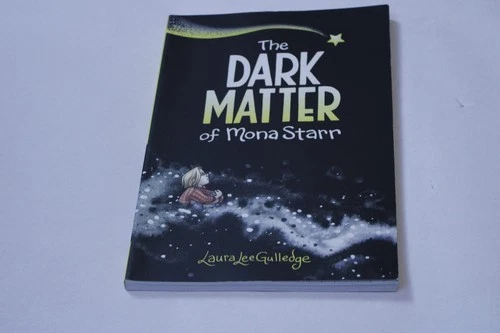
Let me lay the facts down plainly first, because I believe in standing on honest ground, and this is a book that rewards the reader who comes to it with clear eyes. The Dark Matter of Mona Starr is a graphic novel, a work that tells its story through interleaved art and text, written and drawn by Laura Lee Gulledge. Gulledge is the creator behind the well loved Page by Paige, and she has a particular gift for rendering interiors, both the physical interiors of rooms and the much harder to draw interiors of a feeling mind. The book follows Mona Starr, a teenage girl with artistic ambitions, as she navigates the everyday pressures of school, family, friends, and the formidable, demanding business of trying to be creative on schedule. Along the way she begins to encounter what she comes to call her dark matter, formless darkened voids and gravitational fields that follow her, that at first feel only like heaviness and dread. The story is her attempt to map that territory, to figure out what the dark matter actually is, where it came from, whether the voids are her or something that visits her, and what it would mean to stop fighting it and instead learn its patterns. I will be honest with you the way I always try to be. I do not have in front of me the precise page count or the exact printing details of this particular edition, so I will not invent figures. What I can tell you truthfully is what this book is, why it has resonated with so many readers who recognize that hum, and what sort of reading experience you are actually paying for, and that is far more valuable than a number on a back cover.
What makes this book important, and I want to give this idea real weight, is how it reframes the experience of bad days and heavy minds. Most of us have grown up on a version of the story where the anxious or the depressed person is instructed to just cheer up, to fight through, to replace the dark thought with a bright one, to overcome the whisper with a shout. The book gently but firmly questions the entire premise of that advice. It suggests, through Mona’s slow, unglamorous, deeply sympathetic progress, that you do not banish the darkness by locking it out so much as by finally turning to face it and asking what it has been trying to tell you. The dark matter, in Gulledge’s telling, is not your enemy. It is more like a very loud, very confused, very frightened part of you that never learned how to talk any other way. It is the cry of a self that is being crushed by expectation, by the rush of the world, by the crushing weight of having to be good and productive and cheerful all at once. When Mona stops trying to push the dark matter away and begins instead to sit with it, to draw it, to chart its arrival and its triggers, something shifts. It does not vanish, because the book is far too honest to offer that fairy tale ending. But it becomes something she can name, and naming is the beginning of all other power. That is a profound and useful lesson, and it is delivered, crucially, to the exact audience most in need of it, the young people who so often feel alone in thinking that something inside them is broken.
Part of why the book works so well is precisely the medium Gulledge chose, and I want to spend a moment on why graphic form is not a gimmick here but the essential language of the story. The dark matter is, by definition, invisible and formless and best felt indirectly through its pull on everything around it. That is almost impossible to convey in a page of plain text alone, which can only describe it, and hard to convey in prose-heavy fiction, which must satirize or symbolize it. But a graphic novel can show it. Gulledge draws the dark matter as voids, as pockets of negative space, as shadowy gravitational fields bending the panels around them. The reader sees the ordinary world of Mona’s bedroom, her hallway, her classroom, and then watches how that ordinary world warps and dims when the dark matter is near. We are not told that Mona feels weighed down. We see the panels themselves sink, the colors drain, the lines sag. This is the pact of the medium working at its best, the art not illustrating the text but doing meaning that prose alone cannot reach. For a reader who has felt such a weight, there is an almost shocking recognition in those pages, the shock of seeing the inside of your own head drawn with such fidelity that you wonder how the author got in there. And for a reader who has never felt it, the art provides something equally valuable, a window into an experience that is otherwise almost impossible to explain to someone who has not lived it. That is why this is a book that belongs not only in the hands of the anxious but on the reading lists of the empathetic, because understanding is the rarest gift one person can give another.
There is also, woven quietly through all of this, a real story about the loneliness of the creative life, and I think that is why the book means so much to the artists and writers who champion it. Mona is an artist, and she carries inside her the particular dread that haunts anyone who makes things, the fear that the well is dry, that tomorrow the ideas will not come, that the work is not good enough, that no amount of effort will ever repay the exposure of making yourself vulnerable on the page. Gulledge does not pretend that being creative saves you from the dark matter, as if good art were a vaccine against a heavy mind. If anything, she suggests the two are sometimes tangled together, that the same sensitivity that lets Mona see and draw the textures of the world is the sensitivity that lets the dark matter whisper so loudly in her ear. What the book offers, instead of the bogus promise of immunity, is the far more useful lesson of sustainable practice, of showing up to the work even when the dark matter is pulling at the edges of the page, of building small rituals of consistency, of learning to make things not by waiting for a perfect, untroubled state of mind but by making things anyway, day by messy day. For anyone who has ever sat staring at a blank page with a heavy heart and a head full of static, the description of Mona finding her way back to the work again and again is a kind of quiet scripture. It is permission to be an artist who struggles, which is another way of saying permission to be an artist at all.
I want to be equally honest about what this book is not, so that no one comes to it with the wrong map in their hands. It is not a thriller in the shape of a spaceship chase, despite the science fiction flavor in its title. The sci fi here lives in the governing metaphor, dark matter as a literal thing our heroine is navigating, rather than in lasers and rockets and alien empires. Readers expecting fast-paced cosmic adventure will find instead a slower, interior, intimate work. Nor is it a self help manual with checklists and prescriptions, and I think that honesty matters, because the book’s refusal to be a manual is part of its power. It does not presume to know your diagnosis or to hand you a ten step program. It tells one specific girl’s story with such fidelity that you are invited to see your own within it, and it trusts you to draw your own conclusions. And it is not a gloomy wallow. There is genuine warmth here, real friendships, small steady comforts, an ending that is hopeful without being false. The dark matter does not leave, but Mona learns to live alongside it, to draw it, to make the art she was afraid she could not make, and that is a far stronger, more durable kind of hope than the cheap kind that pretends the struggle was imaginary all along.
Let me turn now, as I am sure you have been waiting for me to, to the state of the specific copy you would be bringing home. The listing marks this as brand new, which for a graphic novel is a genuinely pleasing thing to report. These are books built to be pored over, to be flipped back and forth, to be set down and picked up dozens of times, to live at the edge of a desk or on a stack by the bed, and knowing that your copy begins its life clean, unmarked, and undistorted is reassuring in the same way that knowing a clean, fresh set of pages is waiting for a reader is always reassuring. The art inside is crisp and the binding is whole, so every one of Gulledge’s carefully drawn panels can do its intended work without a page folded the wrong way or a stain landing where a face should be. I will not pretend it will stay pristine forever, because the whole point of a book this good is that you will want to hold it and revisit it, and its corners will soften with that affection, and that is not a flaw but a small biography of ownership written over time. But it starts as it should, fresh and new, ready to be the book that somebody somewhere recognizes in the very first quiet page.
Getting it to you matters to me, and I want to tell you a little about how I go about that, because I know how much a modest purchase like this can hinge on trust. I pack it with care, wrapping and cushioning it so that those panels and that binding survive the journey intact, protected from the jolts and the stacking and the rough edges of transit. I ship it promptly, because I know that when you have decided you want a book, especially a book that speaks to something real in your life or the life of someone you love, you want it soon and not after a long, anxious wait. The copy that arrives will be the copy as listed, brand new, undamaged, ready to be opened. And I want to be candid that everything I have told you here about what the book is and what it offers is the truth about the work itself, as best I can speak to it from knowledge and care, while the state of the physical object is true to its listing, and both of those things being straight with you is the whole foundation of doing business the right way.
I want to close by putting this small purchase into its truest frame, because the frame is what gives it its meaning. A book about dark matter is, at the end of the day, a book about what we do with the parts of ourselves that feel formless and frightening, the parts we so often try to hide from the world and even from our own attention. To give such a book to a young person, or to a young artist, or to anyone who feels that hum, is to tell them that they are not alone in it, that the language of their weirdest inner weather has been written down, that somebody saw it well enough to draw it, and that there is a way through that is not the way of shouting the darkness down but the way of finally turning around and looking at it. That is a genuinely kind and useful gift, and it costs about the same as a snack. Whether you are buying it for yourself because you recognize the hum, or for a young person who you fear is carrying it silently, or for a reader who simply loves graphic novels at the height of their craft, let me make the reaching as easy as I can. Follow the link to the listing, place the order, and wait for the small, carefully packed parcel to arrive. Then find a quiet hour, open the pages, and let Mona Starr show you what it looks like when someone stops fighting their own gravity long enough to learn its gravity well. That, more than any words I can add, is the whole reason this book matters, and it is already only a few clicks away.
AI FAQ — The Dark Matter of Mona Starr
1. What exactly is this book about?
A. It is a graphic novel by Laura Lee Gulledge about a teenage artist named Mona Starr who experiences anxiety and heavy moods she comes to call her dark matter, and who slowly learns to understand and live alongside that feeling rather than fight it as an enemy.
2. Is it a science fiction book in the usual sense?
A. Not exactly. It uses dark matter as a powerful metaphor, with the invisible force drawn as voids and gravitational fields, but the story itself is an intimate, interior tale of a young person’s mental health and creativity rather than a space adventure.
3. Who is Laura Lee Gulledge?
A. She is a graphic novelist best known for Page by Paige, and she has a reputation for drawing emotional interiors with real fidelity, which is precisely the skill on display in The Dark Matter of Mona Starr.
4. Who is the right reader for a book like this?
A. It speaks most directly to teens and young adults, and to anyone who has felt the particular heavy hum of anxiety, but it also belongs in the hands of empathetic readers, parents, and educators who want to understand that inner experience.
5. Does the book offer practical advice or a self help plan?
A. No, and that is part of its strength. It tells one girl’s story with such honesty that readers are invited to recognize their own experience within it, trusting them to draw their own conclusions rather than handing out step by step prescriptions.
6. Is it a depressing book?
A. It is honest about heaviness, but it is fundamentally hopeful, with warmth, real friendships, and an ending that offers durable hope without pretending the struggle is imaginary or easily dissolved.
7. Does it explore creativity and the artistic life?
A. Yes. Mona is an artist, and the book examines the fear of the empty well and the sustainable practice of making work anyway, making it quietly important to writers and artists who struggle.
8. Is this copy new and in good condition?
A. Yes. The listing describes it as brand new, a clean, uncirculated copy with crisp art and a whole binding ready for the kind of repeated pored-over reading a beloved graphic novel invites.
9. Would this work well as a gift?
A. Very much so, especially for a young artist or a reader who may be carrying something silently, since it tells them they are not alone in their inner weather in a way few books manage.
10. Why buy this from Wiredwizard rather than elsewhere?
A. This listing offers a fresh, brand new copy at a modest price, shipped promptly and packed with protective care so the pages and art arrive clean and whole, ready to be opened and recognized.
Buy it on eBay
Get this item now at the Wiredwizard eBay store: this listing on eBay.