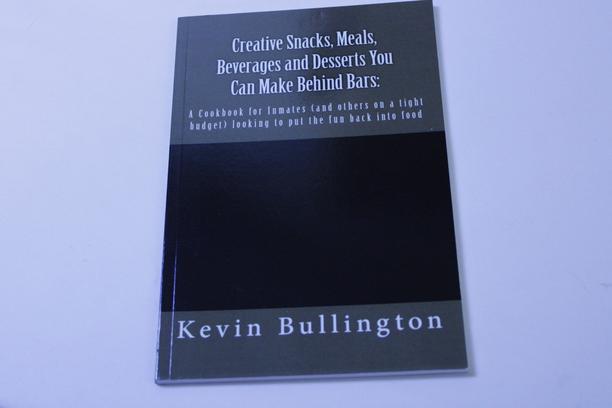

BUY IT NOW : Creative Snacks Behind Bars by Kevin Bullington The Ultimate Prison Recipe Guide
Prison Cookbook Essential: Creative Snacks Behind Bars by Kevin Bullington – Ultimate Prison Recipe Collector’s Guide and Review
Creative Snacks Behind Bars by Kevin Bullington is a specialized prison cookbook documenting commissary cooking and inmate recipe innovation within the constraints of the American correctional system. Unlike conventional cookbooks, this title functions as both a practical recipe manual and an ethnographic record of how incarcerated individuals create flavor, community, and normalcy using strictly limited resources. For collectors of true crime literature, prison culture studies, and culinary anthropology, this book represents an authentic primary source on the sociology of confinement.
The volume details the transformation of shelf-stable commissary staples into satisfying snacks, spreads, and meals without access to traditional kitchens, stoves, or refrigeration. Its value extends beyond the recipes themselves, offering insight into barter economies, social hierarchy, and creative resilience inside correctional facilities. This is not a mass-market cooking guide but a niche document of institutional foodways that has become a sought-after conversation piece for private libraries and academic collections. Secure this item directly from our eBay store
What Is Creative Snacks Behind Bars? Defining the Prison Cookbook Genre
The prison cookbook genre is a sub-category of culinary literature focused on food preparation inside jails and prisons. These books archive techniques developed in environments where the Federal Bureau of Prisons and state Department of Corrections commissary lists dictate available ingredients. Creative Snacks Behind Bars by Kevin Bullington is positioned within this genre as a guide to cell cooking, where heat sources are limited to hot water, microwaves where available, and improvised warming methods.
Prison recipes, often called spreads or chi-chis, emerged as a distinct culinary tradition in the late 20th century as commissary systems expanded. The spreads combine instant ramen, processed cheese, meats, and snack foods into layered, shareable dishes that serve as currency and social ritual. Bullington documents this tradition with direct, instructional language that reflects the reality of limited tools, strict portioning, and the need for rapid preparation.
The Sociology of Commissary Cooking
Commissary cooking is a direct response to institutional food service limitations. Standard correctional facility meals are designed for caloric efficiency and cost control, often lacking flavor variation and cultural familiarity. Inmates use commissary purchases to supplement nutrition, recreate outside foods, and establish autonomy over at least one aspect of daily life.
The act of cooking together builds social capital and trust. Ingredients are pooled, techniques are shared, and the final product is divided according to contribution. Creative Snacks Behind Bars captures this collaborative economy, explaining not only what to combine but why specific flavor profiles are prized within prison populations.
From Cell Block to Bookshelf: Why This Book Matters
For researchers, this book provides a firsthand account of material culture under constraint. For true crime enthusiasts and collectors, it offers authenticity that fictionalized prison narratives cannot replicate. For culinary historians, it preserves a folk cuisine that is rarely documented in formal publishing due to its association with incarceration.
The book’s raw instructional style distinguishes it from stylized, chef-driven prison-inspired cookbooks. It does not romanticize the environment. It presents practical, replicable methods that emphasize ingenuity over presentation, making it a credible artifact for understanding daily life behind bars.
Inside the Book: Recipe Engineering with Commissary Constraints
Creative Snacks Behind Bars structures its content around ingredient accessibility rather than traditional course categories. Recipes are engineered for preparation with plastic bags, Styrofoam containers, hot water, and limited cutting tools. Measurements are described in tactile, proportional terms such as handfuls, packets, and sleeves rather than cups and grams, reflecting the actual conditions of use.
- Ramen-Based Spreads: Multiple variations using crushed instant ramen noodles as a starch base, combined with squeeze cheese, summer sausage, and hot sauce to create dense, savory cakes or burritos.
- Prison Cheesecake and Sweets: Constructions using crushed cookies, candy bars, peanut butter, and coffee creamer to simulate cheesecake, fudge, and candy-like desserts without baking.
- Meat and Cheese Wraps: Tortilla-based snacks using shelf-stable meats, chili beans, and cheese spreads, often pressed and heated with hot water.
- Chili and Soup Innovations: Layered soups and chilies built from ramen seasoning, crushed chips, and pickled jalapeños for heat and texture.
- Snack Mixes and Spreads: Dips and spreads for chips and crackers using tuna, mayonnaise packets, and hot sauce, designed for sharing.
Core Ingredients and Improvised Techniques
The ingredient lexicon of the book centers on the standard U.S. prison commissary inventory. Understanding these components is essential for contextualizing the recipes.
| Attribute | Detail |
|---|---|
| Title | Creative Snacks Behind Bars |
| Author | Kevin Bullington |
| Genre | Prison Cookbook / Culinary Anthropology / True Crime / Sociology |
| Primary Focus | Commissary-based snack and spread recipes engineered for correctional facility constraints |
| Core Ingredients | Instant ramen, pork rinds, squeeze cheese, summer sausage, refried beans, crushed potato chips, candy bars, peanut butter, tortillas |
| Preparation Method | No-stove techniques using hot water, bag-mixing, and container pressing |
| Audience | Collectors, true crime readers, sociology students, culinary historians, survivalism enthusiasts |
| Format | Descriptive recipe guide with narrative context |
Techniques emphasize sanitation, speed, and minimal equipment. Mixing is performed inside sealed plastic bags, flavor is built through layering seasoning packets, and texture is created by controlling water absorption in noodles and chips. These methods demonstrate advanced improvisational food science developed without formal training.
Collector Value and Cultural Significance
Books documenting authentic prison life occupy a distinct niche in the collectible book market. Titles like Creative Snacks Behind Bars are valued for their unfiltered perspective and limited mainstream distribution. Unlike mass-produced celebrity cookbooks, prison cookbooks are often published independently or through small presses, resulting in smaller print runs and higher scarcity.
Collector demand is driven by three factors: authenticity, category scarcity, and cross-genre appeal. The book intersects with true crime, correctional system studies, folk cuisine, and American subculture documentation. This multi-category relevance increases its desirability for private collectors who curate libraries around unconventional social histories.
- Authentic Voice: Written from a perspective that understands commissary economics and cell-block social dynamics, not an outside observer.
- Conversation Artifact: Serves as a tangible discussion piece on incarceration, resilience, and resourcefulness in American culture.
- Academic Utility: Used as supplementary material for courses in criminology, sociology, and food studies.
- Gifting and Display: Distinctive cover and subject matter make it a standout addition to bookshelves focused on rare or provocative titles.
Condition and completeness are critical for collector value. This copy retains its original instructional content covering the full range of snack combinations developed for prison life. As institutional regulations and commissary inventories change, books like this preserve a specific temporal snapshot of prison foodways that cannot be reproduced.
Who Should Own This Edition? Use Cases Beyond the Kitchen
Ownership of Creative Snacks Behind Bars extends far beyond culinary application. While the recipes are fully replicable, the book’s primary utility for most owners is cultural and educational.
- True Crime and Prison Culture Enthusiasts: Gain a ground-level view of daily rituals that are absent from court transcripts and documentaries.
- Sociology and Criminal Justice Students: Use the text as a case study in adaptation, informal economies, and institutional culture.
- Culinary Adventurers and Survivalists: Learn extreme pantry cooking and flavor-building with shelf-stable, low-cost ingredients applicable to camping, emergency preparedness, and budget cooking.
- Book Collectors of Unconventional Genres: Add a rare, niche title that diversifies a collection beyond mainstream food writing.
- Content Creators and Writers: Source authentic detail for fiction, screenplays, or nonfiction projects involving correctional settings.
Even for readers with no intention of recreating the snacks, the book offers a compelling narrative about human creativity under restriction. It reframes cooking as an act of psychological preservation, where recreating the taste of a nacho or a sweet treat becomes a method of maintaining identity.
For those ready to add this unconventional culinary document to their collection, sourcing a verified copy is essential. Check availability and secure this copy on eBay now
Answers & FAQs
What specific commissary ingredients are featured in Creative Snacks Behind Bars recipes?
The recipes primarily utilize instant ramen noodles, squeeze cheese, pork rinds, summer sausage, chili seasoning packets, and crushed potato chips available through prison commissary. These staples are combined using hot water, trash bag mixing, and bunk-heated techniques rather than stoves or ovens.
How does Creative Snacks Behind Bars differ from standard cookbooks and mainstream prison cookbooks?
Unlike traditional cookbooks that rely on measured ingredients and kitchen appliances, this book documents improvisational methods developed under correctional facility restrictions without access to knives, stoves, or refrigeration. It prioritizes resourcefulness and narrative authenticity over precise culinary technique, making it an ethnographic document as much as a recipe collection.
Is Creative Snacks Behind Bars by Kevin Bullington considered a collectible for true crime and prison culture collectors?
Yes, titles documenting authentic inmate foodways occupy a niche collectible category within true crime, sociology, and contraband literature collections. Copies of Creative Snacks Behind Bars are sought for their unfiltered perspective and are increasingly difficult to source through conventional retail channels.
Can the recipes be recreated at home outside a correctional environment?
All recipes can be replicated in a home kitchen using identical convenience store and grocery equivalents of commissary items. Home replication allows enthusiasts to appreciate the flavor innovation while using standard food safety practices and conventional heating methods.
BUY IT NOW : Creative Snacks Behind Bars by Kevin Bullington The Ultimate Prison Recipe Guide
Get AI Tools
Openwork – Free AI Helper https://openworklabs.com/
HyNote – AI Notetaking https://hynote.ai/?via=MGZFMA83PH
Rokid Glasses : https://rokid.sjv.io/1Gz3G9