
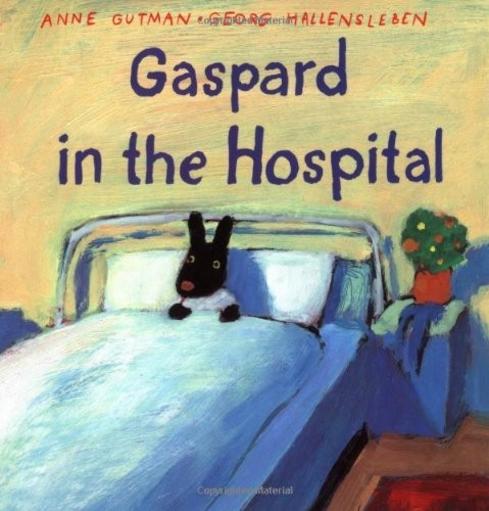

BUY IT NOW : Gaspard in the Hospital by Anne Gutman – Childrens Illustrated Fiction Picture
Childrens Book Essential: Gaspard in the Hospital by Anne Gutman – Definitive Review and Guide for Preparing Toddlers for Hospital Visits
Gaspard in the Hospital by Anne Gutman is a cornerstone title in pediatric bibliotherapy, designed to demystify the hospital experience for children ages 18 months to 5 years. Part of the internationally acclaimed Gaspard and Lisa (Gaspard et Lisa) series, this picture book uses narrative normalization to transform clinical environments, medical staff, and separation anxiety into comprehensible, manageable concepts for toddlers. For parents, caregivers, and early childhood educators, it functions as a pre-procedural preparation tool that builds emotional literacy before scheduled surgeries, overnight stays, or emergency department visits.
Unlike generic hospital books that rely on clinical diagrams, Anne Gutman and illustrator Georg Hallensleben utilize character-driven storytelling and Expressionist, high-contrast gouache illustrations to create an empathetic anchor. Gaspard, the endearing black dog character, models calm coping behaviors, allowing young readers to project their own fears onto a trusted protagonist and rehearse positive outcomes. This guide provides a definitive analysis of the book’s narrative structure, developmental benefits, and collector specifications.
What Is Gaspard in the Hospital? Complete Book Overview
Gaspard in the Hospital (Gaspard à l’hôpital) follows Gaspard as he experiences an unexpected hospital stay. The narrative is deliberately paced to mirror a real pediatric admission: arrival, changing into a hospital gown, meeting nurses and doctors, undergoing examinations, resting in a hospital bed, and ultimately, discharge and return home. The text is intentionally concise, with 32 pages of simple declarative sentences suitable for limited attention spans and emergent language learners.
The book was originally created by the French husband-and-wife team Anne Gutman and Georg Hallensleben and published in English by Alfred A. Knopf Books for Young Readers. The series is recognized for its authentic depiction of Parisian childhood and its psychological realism. Gutman, a former designer, writes with semantic precision for bilingual and monolingual households, while Hallensleben’s art, characterized by thick black outlines and saturated primary colors, is developmentally optimized for toddler visual processing and object recognition.
The Gaspard and Lisa Universe: Genre and Historical Context
The Gaspard and Lisa franchise debuted in 1999 with Gaspard on Vacation and has since expanded to over 30 titles, an animated television series on Disney Junior, and translations in 14 languages. The series belongs to the genre of social-emotional learning (SEL) picture books, which gained prominence in the early 2000s as child psychology research emphasized narrative play for anxiety inoculation. While characters like Curious George and Maisy address similar themes, Gaspard and Lisa are distinguished by their focus on everyday resilience rather than fantasy.
Gaspard in the Hospital occupies a specific sub-genre: medical preparation literature. Alongside titles such as Curious George Goes to the Hospital by Margret and H.A. Rey and Franklin Goes to the Hospital by Paulette Bourgeois, it is recommended by child life specialists at major pediatric hospitals. Its collector value derives from its status as a sought-after out-of-print companion title; complete English-language printings in near-mint condition are increasingly scarce on the secondary market, making verified listings highly desirable for series completists.
Why Preparation Books Reduce Pediatric Hospital Anxiety: Evidence-Based Benefits
Hospitalization is a primary source of acute stress for toddlers, triggering fears related to separation from parents, pain, loss of control, and unfamiliar sensory stimuli. Research in pediatric psychology demonstrates that pre-exposure through storybooks significantly reduces pre-operative anxiety and improves cooperation during procedures.
Gaspard in the Hospital delivers four concrete developmental benefits:
- Sensory Familiarization: The book introduces hospital-specific entities including stethoscopes, hospital gowns, IV poles, bedside monitors, and rolling beds in a non-threatening visual context. Repeated exposure before admission reduces novelty-induced fear when the child encounters these objects in reality.
- Emotional Vocabulary Development: The narrative labels feelings such as worry, boredom, and relief without dramatizing them. This scaffolding helps toddlers aged 2-4 years articulate distress using words instead of tantrums or withdrawal, a core tenet of emotion coaching.
- Modeling of Trust in Caregivers: The story emphasizes the benevolence and competence of nurses and doctors. Gaspard is shown being listened to, comforted, and cared for, which reinforces a secure attachment model where medical professionals are helpers, not threats.
- Restoration of Predictability and Closure: The plot arc is closed-loop, ending with Gaspard returning home healthy. This narrative resolution is critical for toddlers who lack temporal understanding; it assures them that a hospital stay is temporary and home is the definitive endpoint.
For parents, the book provides a scripted, low-pressure prompt for difficult conversations. Reading the book 2-3 days before a scheduled visit allows for iterative questioning and play-based rehearsal, such as role-playing with a toy doctor kit.
Inside the Story: Key Themes and Illustrative Approach
The narrative avoids graphic medical detail, making it appropriate for sensitive readers. Key thematic sequences include:
1. Normalization of the Clinical Environment
Hallensleben’s illustrations depict the hospital not as sterile or frightening, but as bright, organized, and populated with kind faces. The use of warm yellows and soft blues counteracts the typical white-coat anxiety associated with clinical photography.
2. Validation Without Catastrophizing
Gaspard is shown looking small in a large bed and appearing quietly pensive, which validates a child’s potential feelings of vulnerability. The text never introduces pain or needles explicitly, keeping the focus on observation, rest, and care.
3. Autonomy and Comfort Objects
The story subtly reinforces that Gaspard retains aspects of his identity and comfort, such as visitors and reassurance. This element encourages parents to pack a transitional object like a blanket or stuffed animal for their own child’s stay.
Secure this copy directly from our official eBay store
Product Specifications and Collector Details
For collectors, booksellers, and librarians, accurate bibliographic data is essential for condition grading and series authentication.
| Attribute | Detail |
|---|---|
| Full Title | Gaspard in the Hospital (Gaspard à l’hôpital) |
| Author | Anne Gutman |
| Illustrator | Georg Hallensleben |
| Series | Gaspard and Lisa / Gaspard et Lisa |
| Publisher (English Edition) | Alfred A. Knopf / Random House Children’s Books |
| Format | Hardcover Picture Book, 32 pages |
| Dimensions | Approximately 8.5 x 10 inches (Square Trim) |
| Recommended Age | 18 months – 5 years (Toddler to Preschool / Pre-K) |
| Lexile / Reading Level | AD 400L – 500L, Guided Reading Level I-J |
| Key Themes | Hospitalization, Resilience, Friendship, Medical Literacy, Family Support |
| Illustration Medium | Gouache on Paper, Bold Outlines, High-Chroma Palette |
First English printings feature a matte dust jacket with spot gloss on the title lettering and retain the original French endpapers. When assessing value, inspect for intact binding, unmarked pages, and absence of ex-library stamps or stickers. As a preparation title, copies are frequently well-loved, which increases scarcity of fine-condition examples.
Who Needs This Book: Target Use Cases and Gifting Scenarios
This title is a high-utility acquisition for several distinct audiences:
- Parents of Toddlers with Scheduled Procedures: Ideal for pre-admission preparation for tonsillectomy, ear tube placement, hernia repair, or diagnostic imaging requiring sedation. Reading together establishes a predictable narrative that can be referenced during the actual stay.
- Early Childhood Educators and Daycare Providers: Functions as a core text for health-themed curriculum units, doctor-role-play centers, and discussions about community helpers. Supports CASEL competencies for self-awareness and social awareness.
- Child Life Specialists and Pediatric Clinics: Used as a bibliotherapy resource in waiting rooms and pre-op libraries to reduce patient distress and improve parental satisfaction scores.
- Gift Buyers and Gaspard and Lisa Collectors: A thoughtful, practical gift for baby showers, toddler birthdays, or get-well baskets that offers enduring value beyond traditional toys. Completes a full series collection for dedicated collectors of Gutman and Hallensleben works.
- Foster and Adoptive Families: Provides a gentle, non-triggering tool to discuss medical history and build trust around healthcare systems for children who have experienced medical trauma or placement transitions.
For optimal impact, pair the book with a tangible activity. After reading, invite the child to draw their own hospital picture or practice listening to a heartbeat with a toy stethoscope to reinforce agency and comprehension.
Answers & FAQs
Is Gaspard in the Hospital too frightening for a highly sensitive 2-year-old?
No, the book is intentionally non-threatening and contains no images of pain, blood, or medical instruments in use. It focuses exclusively on reassuring elements like caring staff, resting, and going home.
How does this book compare to other hospital books like Curious George Goes to the Hospital?
Gaspard in the Hospital is shorter, more emotionally focused, and uses a calmer color palette than Curious George. It is better suited for toddlers under 4, while Curious George is better for preschoolers who can handle a longer, more comedic plot.
Can this book be used for an unexpected emergency room visit preparation?
Yes, its general focus on hospital routines rather than a specific surgery makes it adaptable for any medical setting. It can be read in the waiting room or car to provide immediate contextual framing and distraction.
Is this title part of a larger series and does reading order matter?
Yes, it is part of the 30+ book Gaspard and Lisa series, but each title is a standalone story. No prior knowledge of the characters is required to benefit from the hospital narrative.
Equipping a child with a familiar story before a medical event is a proven strategy for fostering cooperation and emotional regulation. This essential volume combines literary quality, developmental appropriateness, and enduring collector appeal in a single, compact format.
Check current availability and secure this item directly from our eBay store
BUY IT NOW : Gaspard in the Hospital by Anne Gutman – Childrens Illustrated Fiction Picture
Get AI Tools
Openwork – Free AI Helper https://openworklabs.com/
HyNote – AI Notetaking https://hynote.ai/?via=MGZFMA83PH
Rokid Glasses : https://rokid.sjv.io/1Gz3G9