
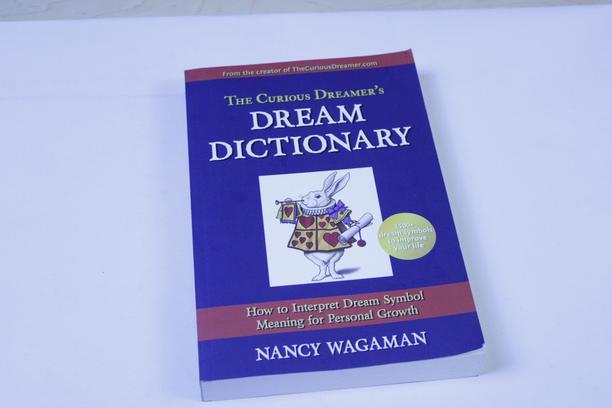

BUY IT NOW : The Curious Dreamer’s Dream Dictionary How to Interpret Dreams by Nancy
Dream Interpretation Essential: The Curious Dreamer’s Dream Dictionary How to Interpret Dreams by Nancy Wagaman – Definitive Collector’s Guide to Dream Symbols, Meanings and Interpretation Review
The Curious Dreamer’s Dream Dictionary: How to Interpret Dreams by Nancy Wagaman is a comprehensive A-to-Z reference designed to decode the symbolic language of the subconscious. This practical guide functions as an interpretive lexicon for over thousands of common and complex dream images, scenarios, and archetypal themes encountered during REM sleep. Unlike purely mystical or purely clinical texts, Wagaman’s methodology bridges subjective personal association with established psychological frameworks, providing dreamers with a structured system to translate nocturnal narratives into actionable self-insight. For collectors of esoteric literature, psychology reference, and self-help nonfiction, this edition represents a highly accessible and functional cornerstone for any metaphysical or behavioral science library.
What Is The Curious Dreamer’s Dream Dictionary: How to Interpret Dreams?
This volume is organized as a true dictionary, enabling rapid lookup of specific dream entities, objects, actions, and settings. Each entry defines the symbol, explores its psychological resonance, and prompts the reader to connect the image to waking-life emotions, relationships, and stressors. The book moves beyond simple one-word definitions to offer contextual interpretation, recognizing that a symbol such as water, a house, or a chase sequence carries different valence depending on the dreamer’s concurrent experience. This approach makes it a daily-use tool for dream journaling rather than a one-time read.
Author Authority: Who Is Nancy Wagaman?
Nancy Wagaman is recognized for her accessible approach to popular psychology and dream analysis, focusing on demystifying internal dialogue for a general audience. Her work synthesizes core concepts from oneirology, the scientific study of dreams, without requiring advanced academic training from the reader. Wagaman positions dream interpretation as a skill of introspection rather than divination, emphasizing personal relevance over universal fatalism. Her authority rests on clarity, organization, and the ability to present complex subconscious mechanisms in a practical, reference-ready format.
Inside the Dictionary: Structure, Scope and Symbol Taxonomy
The reference architecture of this dream dictionary is its primary functional advantage. Entries are alphabetized for immediate retrieval, allowing a user to analyze a dream within minutes of waking before memory decay occurs. Definitions are concise, cross-referenced, and written to trigger associative recall, helping the dreamer link the symbol to recent events or unresolved emotional patterns. The layout supports both linear study and fragmented, as-needed consultation.
Core Dream Symbol Categories Decoded
The Curious Dreamer’s Dream Dictionary provides extensive coverage of high-frequency dream motifs that dominate dream recall research. Its taxonomy includes:
- Common Anxiety Motifs: Falling, being chased, flying, paralysis, missed examinations, and being unprepared for public performance, interpreted through lenses of control, avoidance, and performance pressure.
- Archetypal Figures and Relationships: Appearances of family members, partners, strangers, authority figures, children, and deceased individuals, analyzed for projection, attachment, and unresolved interpersonal dynamics.
- Environmental and Elemental Symbols: Houses and rooms representing aspects of the self, water indicating emotional states, fire signifying transformation or anger, and natural landscapes reflecting inner terrain.
- Objects and Actions: Vehicles denoting life direction and momentum, doors and keys symbolizing opportunity and access, and acts such as losing teeth or searching, connected to self-image and existential anxiety.
- Recurring and Lucid Themes: Dedicated guidance for identifying patterns in recurring dreams and leveraging lucidity to actively engage with dream content for problem-solving.
Practical Framework for Dream Analysis
Wagaman provides a repeatable three-stage method for interpretation that elevates the book beyond a simple symbol list. First, the reader is instructed to record the dream narrative verbatim with sensory and emotional detail. Second, the dictionary is used to identify primary symbols and their range of psychological associations. Third, the reader applies introspective filtering questions to determine which association aligns with current waking-life context, relationships, and emotional stressors. This system prevents deterministic readings and trains the user in longitudinal dream pattern recognition.
Secure this item directly from our eBay store
Historical and Psychological Context: Where This Guide Fits in Oneirology
Dream dictionaries trace their lineage to antiquity, from Artemidorus’ Oneirocritica in the 2nd century CE to the foundational psychoanalytic texts of the modern era. Sigmund Freud’s The Interpretation of Dreams (1899) established dreams as manifestations of repressed wishes and unconscious conflict, while Carl Jung expanded the lexicon to include the collective unconscious and universal archetypes. Contemporary dream research, including the work of the International Association for the Study of Dreams (IASD), views dreaming as a function of emotional memory consolidation and cognitive processing during REM and NREM sleep.
The Curious Dreamer’s Dream Dictionary occupies a distinct position within this continuum. It does not advocate strict Freudian determinism or esoteric prophecy, instead aligning with modern cognitive and humanistic psychology. It treats dream symbols as personalized metaphors shaped by individual experience rather than fixed omens. For collectors, this places the book in the post-Jungian, practical psychology genre—a category of high-demand, reader-friendly reference that remains relevant regardless of shifting clinical trends, unlike highly technical academic monographs that date quickly.
Collector Value and Edition Specifics
For book collectors specializing in metaphysical studies, New Age reference, and applied psychology, a well-preserved dictionary-format guide holds distinct long-term utility value. Unlike narrative-driven dream books, a dictionary is designed for perpetual reference, ensuring consistent shelf use and retention. The physical usability, typography clarity, and comprehensive index are critical valuation factors for this genre. This title is sought after for its balance of breadth, portability, and non-dogmatic approach, making it a frequent recommendation for both beginners and experienced journal keepers.
| Specification | Detail |
|---|---|
| Title | The Curious Dreamer’s Dream Dictionary: How to Interpret Dreams |
| Author | Nancy Wagaman |
| Format | Print Reference / Dream Dictionary (Alphabetized A-to-Z) |
| Genre | Oneirology, Dream Interpretation, Popular Psychology, Self-Help Reference |
| Function | Symbol Lexicon, Dream Journal Companion, Recurring Theme Analysis |
| Interpretive Model | Psychological-Personal Association (Balanced, Non-Mystical) |
| Ideal Use | Nightstand Reference, Daily Dream Logging, Therapeutic Self-Reflection |
Who Should Own This Edition? Concrete Use Cases
This specific edition delivers measurable value for defined user profiles:
- The Beginning Dream Journalist: Provides an immediate framework for those starting a dream diary who need to move beyond vague recollection to structured analysis of nightly content.
- The Recurring Dream Analyst: Essential for individuals experiencing persistent themes such as pursuit, failure, or loss who require a tool to identify underlying waking-life triggers and interrupt anxiety cycles.
- Students of Psychology and Counseling: Serves as a supplementary, accessible resource for understanding how clients articulate subconscious material and symbolic thinking.
- Collectors of Esoteric and Reference Libraries: Adds a highly functional, user-facing dictionary to collections often dominated by theoretical texts, increasing the practical utility of the library.
- Mindfulness and Self-Reflection Practitioners: Integrates seamlessly with meditation, journaling, and CBT-based thought-recording practices to deepen emotional literacy.
Answers & FAQs
Does The Curious Dreamer’s Dream Dictionary by Nancy Wagaman include interpretations for modern symbols like technology or travel?
Yes, the dictionary extends beyond classical symbols to include contemporary imagery such as vehicles, telephones, buildings, and travel scenarios. This ensures interpretations remain relevant to the modern dreamer’s waking environment and daily stressors.
How does Nancy Wagaman’s approach differ from purely spiritual or Freudian dream books?
Wagaman avoids fixed mystical predictions and rigid Freudian sexual symbolism, instead teaching that meaning derives from the dreamer’s personal emotions and recent life context. Each entry offers multiple psychological angles, allowing the reader to select the interpretation that most accurately reflects their current situation.
Is this dictionary effective for interpreting fragmented or partially remembered dreams?
Absolutely, the A-to-Z format is designed for fragmented recall, allowing you to look up even a single remembered object, color, or feeling. This makes it possible to extract insight from incomplete dreams without needing a full narrative sequence.
What makes this physical reference superior to free online dream symbol databases for serious study?
Online databases often provide contradictory, single-sentence definitions without psychological context or cross-referencing. This curated print edition offers consistent editorial voice, deeper contextual prompts, and a structured interpretive method not found in algorithmic search results.
Condition, Authenticity and Acquisition Guidance
When acquiring a reference title like The Curious Dreamer’s Dream Dictionary, condition directly impacts usability. Collectors should verify clean, unmarked pages, an intact spine for flat lay-open use during journaling, and legible print free from underlining that could bias interpretation. As a high-usage nightstand book, copies with minimal shelf wear and no moisture damage retain the highest functional and collectible value. Securing a verified listing ensures you receive the complete, authentic Nancy Wagaman text with all alphabetized entries intact.
For researchers, practitioners, and collectors seeking a definitive, ready-to-use lexicon for subconscious exploration, this guide provides unmatched daily utility. Check current availability on eBay and add this essential reference to your collection
BUY IT NOW : The Curious Dreamer’s Dream Dictionary How to Interpret Dreams by Nancy
Get AI Tools
Openwork – Free AI Helper https://openworklabs.com/
HyNote – AI Notetaking https://hynote.ai/?via=MGZFMA83PH
Rokid Glasses : https://rokid.sjv.io/1Gz3G9