
BUY IT NOW : Second Suns : Two Doctors and Their Amazing Quest to Restore Sight by David
Nonfiction Essential: Second Suns by David Oliver Relin – Definitive Review and Guide to Restoring Sight in the Himalayas
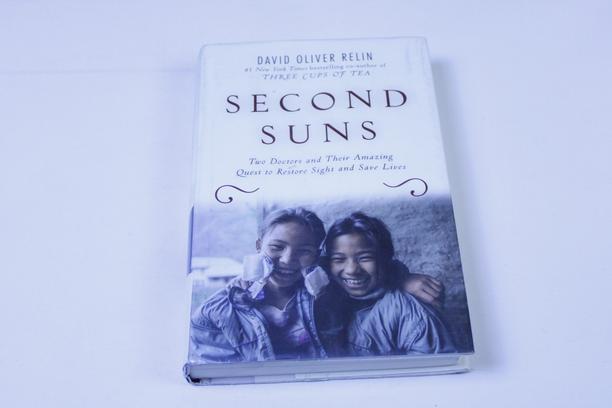
Second Suns: Two Doctors and Their Amazing Quest to Restore Sight and Save Lives by David Oliver Relin is the definitive narrative nonfiction account of the Himalayan cataract crisis and the improbable partnership that confronted it. Published by Random House in 2013, the book documents the 20-year collaboration between Dr. Sanduk Ruit, a Nepalese ophthalmologist raised in a remote Himalayan village, and Dr. Geoffrey Tabin, an American academic ophthalmologist, mountaineer, and co-founder of the Himalayan Cataract Project. Far beyond a medical memoir, it is a work of global health journalism, adventure biography, and humanitarian history that chronicles how low-cost, high-volume cataract surgery restored sight to more than 100,000 patients across Nepal, Tibet, Bhutan, Ethiopia, Myanmar, and North Korea.
For readers of medical humanities, global health policy, and Himalayan literature, Second Suns provides primary-source insight into the logistics of delivering surgical care without reliable electricity, sterile hospitals, or paved roads. The book retains high information gain for collectors, educators, and practitioners because it connects clinical innovation with geopolitical and geographic realities.
What Is Second Suns? The Definitive Narrative Nonfiction Account
Second Suns is structured as a dual biography interwoven with expedition narrative. Relin traces Ruit from his childhood in Olangchunggola, a village on the Nepal-Tibet border with no school or medical clinic, through his medical training at the All India Institute of Medical Sciences in New Delhi under the mentorship of Professor Fred Hollows, to his establishment of the Tilganga Institute of Ophthalmology in Kathmandu. In parallel, Relin follows Tabin from his tenure at Harvard and Brown, his ascent of Mount Everest as the fourth person to summit all Seven Summits, to his decision to forgo a lucrative private practice to pursue high-altitude ophthalmology.
The central medical entity in the book is curable cataract blindness, which the World Health Organization identifies as the leading cause of preventable blindness worldwide, disproportionately affecting populations in South Asia and sub-Saharan Africa. In Nepal alone, an estimated 300,000 people suffer cataract blindness, with many living in villages days of walking distance from the nearest road. Second Suns defines the Ruit Intraocular Lens (IOL), a low-cost artificial lens manufactured at Tilganga’s Fred Hollows Intraocular Lens Laboratory for approximately $3.50 compared to $150 for imported lenses, as the technological breakthrough that made mass treatment economically viable.
From Three Cups of Tea to Second Suns: David Oliver Relin’s Authorship Context
David Oliver Relin (1962-2012) was a Portland-based journalist and co-author of the #1 New York Times bestseller Three Cups of Tea. Second Suns was his final book, completed shortly before his death, and represents a significant shift in thematic focus from education development to surgical humanitarianism. Unlike Three Cups of Tea, which faced controversy over factual accuracy, Second Suns is extensively sourced through direct field observation, interviews with patients, medical staff at Tilganga, and embedded reporting on surgical eye camps in the Mustang region and the Tibetan Plateau.
In the context of narrative nonfiction, the book belongs to the genre of medical adventure exemplified by Tracy Kidder’s Mountains Beyond Mountains and Paul Farmer’s work in Haiti, and by Sheri Fink’s Five Days at Memorial. Its value lies in its granular reporting of camp logistics: sterilization of instruments with pressure cookers, surgery performed on tables in monastery courtyards, and post-operative recovery in tents at 14,000 feet. This operational detail distinguishes it from theoretical global health texts and makes it a practical case study for NGOs and public health programs.
The Core Entities: Dr. Sanduk Ruit, Dr. Geoffrey Tabin, and the Tilganga Institute
Understanding Second Suns requires precise entity recognition of its two principals and their institutions.
- Dr. Sanduk Ruit: Nepal’s most prominent ophthalmologist, founder and Executive Director of Tilganga Institute of Ophthalmology. Ruit pioneered a manual small-incision cataract surgery (MSICS) technique that requires no sutures, no phacoemulsification machine, and can be completed in under five minutes. His method produces visual outcomes equivalent to Western hospital standards at less than 5% of the cost.
- Dr. Geoffrey Tabin: Professor of Ophthalmology and Visual Sciences at Stanford University and University of Utah, Director of the Himalayan Cataract Project. Tabin supplied academic credibility, fundraising infrastructure in the United States, and outreach capacity to replicate the Tilganga model in Ethiopia, Ghana, and North Korea.
- Tilganga Institute of Ophthalmology: Established in 1994 in Kathmandu as a partnership between the Nepal Eye Program and the Fred Hollows Foundation. It functions as a tertiary eye hospital, surgical training center, and IOL manufacturing facility producing over 400,000 lenses annually for export to 30 countries.
- Himalayan Cataract Project (HCP) / Cure Blindness Project: The US-based non-profit co-founded by Ruit and Tabin in 1995 that funds mobile eye camps, trains ophthalmic personnel, and builds sustainable eye care infrastructure in the Himalayas and Africa.
Secure this copy of Second Suns directly from our eBay store to obtain the complete account of this partnership and its surgical methodology documented in full.
The Himalayan Cataract Crisis: Medical and Geographic Context
Second Suns provides authoritative context on why cataract blindness persists as a humanitarian emergency. In high-altitude regions, ultraviolet radiation exposure is 30-40% higher than at sea level, accelerating cataract formation. Vitamin A deficiency, lack of eye protection, and limited access to primary care compound the prevalence. The World Health Organization estimates that 80% of global blindness is preventable, with cataract accounting for 51% of cases.
The book details the geographic barriers to care: patients in Upper Dolpo or Humla may walk for 7-10 days, led by family members, to reach a seasonal eye camp. Upon arrival, they undergo visual acuity screening, biometry, and same-day bilateral surgery. Relin documents the social impact of restored sight: elderly patients who were considered economic burdens and confined to dark rooms regain the ability to farm, weave, and navigate villages independently. This restoration of productivity has measurable economic multiplier effects for agrarian Himalayan communities.
Politically, the narrative covers operations during the Nepalese Civil War (1996-2006), Tibetan restrictions under Chinese administration, and negotiations with the North Korean Ministry of Public Health in Pyongyang, where Ruit and Tabin performed the first modern cataract surgeries in the country in 2006. These chapters offer concrete case studies for students of humanitarian logistics and health diplomacy.
Why Second Suns Is Essential for Global Health, Philanthropy, and Medical Humanities Collections
Second Suns delivers specific use-cases beyond general reading:
- For Medical Students and Ophthalmology Residents: Provides a realistic framework for delivering high-quality care in resource-limited settings and demonstrates the MSICS technique’s relevance where phacoemulsification is not feasible. It is frequently assigned in global health electives at Stanford, Johns Hopkins, and Emory.
- For Non-Profit Leaders and Global Health Practitioners: Offers a replicable model of south-south and north-south partnership where local manufacturing and training ensure sustainability rather than dependency on fly-in missions.
- For Mountaineering and Himalayan Literature Collectors: Sits alongside Jon Krakauer’s Into Thin Air and Maurice Herzog’s Annapurna as essential Himalayan nonfiction, but uniquely centers Nepalese leadership rather than Western expedition perspectives.
- For Philanthropy and Social Entrepreneurship Readers: Quantifies impact with surgical cost metrics: $25 to restore sight in one eye, $50 for bilateral surgery, with a 98% success rate documented by Tilganga outcome audits.
Technical Specifications and Edition Details
| Attribute | Specification |
|---|---|
| Full Title | Second Suns: Two Doctors and Their Amazing Quest to Restore Sight and Save Lives |
| Author | David Oliver Relin |
| Publisher | Random House (New York) |
| Publication Date | June 18, 2013 |
| ISBN-10 / ISBN-13 | 1400062130 / 978-1400062137 (Hardcover First Edition) |
| Page Count | 320 pages (Hardcover), 336 pages (Paperback) |
| Genre & BISAC Codes | Narrative Nonfiction / Medical & Health / Ophthalmology / Travel Asia Himalayas |
| Key Institutions Documented | Tilganga Institute of Ophthalmology, Himalayan Cataract Project, Fred Hollows Foundation, Stanford Byers Eye Institute |
| Geographic Coverage | Nepal, Tibet Autonomous Region, Bhutan, India, Ethiopia, Ghana, North Korea, United States |
Collector Value and Condition Considerations
First edition hardcover copies of Second Suns published by Random House in 2013 feature a distinctive dust jacket with Himalayan mountain imagery and retain collector interest due to Relin’s death in 2012, making this his final published work. Signed copies by Dr. Geoffrey Tabin or Dr. Sanduk Ruit, often obtained at Himalayan Cataract Project benefit events, command premium value in the medical humanities market. Paperback editions (Random House, 2014) include a reader’s guide and additional afterword.
As a modern nonfiction essential, the book’s long-tail value is supported by its continued adoption in university curricula and its status as the most comprehensive English-language source on the Tilganga model. Copies in fine or near-fine condition with intact dust jackets are sought by collectors of signed humanitarian literature and Himalayan expedition narratives. The work’s connection to the ongoing CureBlindness Project ensures enduring relevance as the organization continues to expand to new surgical sites in Africa and Asia.
Acquiring a well-preserved edition ensures archival stability for personal libraries and institutional collections focused on global development, Asian studies, and history of medicine. Check availability and secure this edition on eBay now for a verified copy suitable for collection, classroom use, or philanthropic research.
Answers & FAQs
What specific cataract surgery technique is detailed in Second Suns and why is it vital for Himalayan eye camps?
The book details Dr. Sanduk Ruit’s manual small-incision cataract surgery (MSICS), a sutureless technique that removes the cataract through a 5-6mm incision and implants a low-cost intraocular lens. This method is vital because it requires no expensive phacoemulsification equipment or reliable electricity and can be performed in five minutes in field conditions with 98% success rates.
Is Second Suns a technical ophthalmology textbook or a narrative for general readers?
Second Suns is narrative nonfiction written for general readers and contains no complex medical jargon or surgical diagrams requiring clinical training. It focuses on biography, expedition logistics, and patient outcomes rather than operative instruction, making it accessible to readers interested in humanitarian work, travel, and global health.
How does Second Suns compare to other global health books like Mountains Beyond Mountains?
Second Suns shares the engagement of Mountains Beyond Mountains but is distinguished by its dual-protagonist structure featuring a Nepalese innovator as the primary technical expert rather than a Western savior narrative. It also provides far more detailed operational and geographic context specific to high-altitude Asia versus the Haiti-focused clinical model in Mountains Beyond Mountains.
What is the current status of the organizations founded by the doctors in the book?
The Tilganga Institute of Ophthalmology remains Nepal’s premier eye hospital and lens manufacturing center, and the Himalayan Cataract Project now operates as the CureBlindness Project based at Stanford University. Both organizations continue to conduct hundreds of mobile eye camps annually and have collectively restored sight to over one million people as of 2024.
BUY IT NOW : Second Suns : Two Doctors and Their Amazing Quest to Restore Sight by David
Get AI Tools
Openwork – Free AI Helper https://openworklabs.com/
HyNote – AI Notetaking https://hynote.ai/?via=MGZFMA83PH
Rokid Glasses : https://rokid.sjv.io/1Gz3G9