
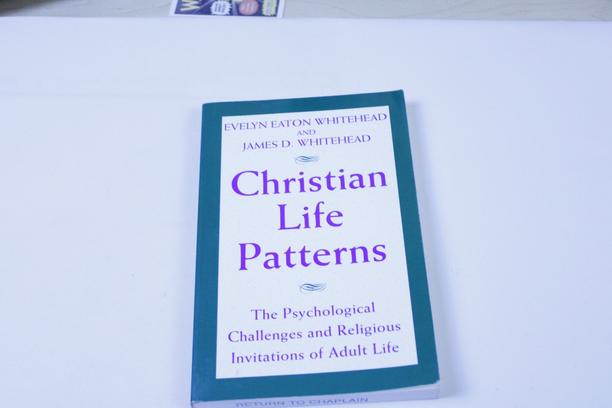

BUY IT NOW : Christian Life Patterns by James D. Whitehead Spiritual Growth Study Book
Spirituality Essential: Christian Life Patterns by James D. Whitehead – Definitive Review and Practical Guide to Integrating Faith Into Daily Life
Christian Life Patterns by James D. Whitehead and Evelyn Eaton Whitehead provides a systematic framework for understanding adult Christian spirituality not as a compartmentalized Sunday practice, but as a continuous pattern embedded within work, family, and vocational transitions. The book addresses the central tension of modern faith: the fragmentation between professional obligations, domestic responsibilities, and the desire for sustained spiritual depth. Rather than offering abstraction, the authors construct a developmental map that allows readers to interpret ordinary routines, relational commitments, and career decisions as primary sites of theological formation. This approach positions daily life itself as the curriculum for spiritual maturity.
Secure this item directly from our eBay store
What Is Christian Life Patterns? Core Thesis and Theological Framework
The central thesis of Christian Life Patterns is that adult life unfolds through identifiable, recurring patterns that carry both psychological challenge and religious invitation. The authors argue that Christian vocation is discerned not through dramatic retreat but through faithful attention to these patterns over time. This model integrates developmental psychology with pastoral theology to demonstrate how faith becomes operative within secular structures.
The framework draws directly on the interplay between adult developmental stages and Christian theological anthropology. Each life pattern, such as the movement toward intimacy, the experience of work and generativity, and the confrontation with limits and loss, is presented as a dual reality requiring psychological negotiation and spiritual response. The text defines spirituality as disciplined reflection on lived experience rather than esoteric practice.
The Methodology of Pattern Recognition in Daily Life
Whitehead and Whitehead introduce pattern recognition as a learnable spiritual discipline. Readers are taught to examine repetition in personal history, including recurring conflicts, sustained commitments, and unresolved transitions, to identify underlying theological questions. This method transforms autobiographical review into a tool for vocational discernment and ethical decision-making. Concrete case studies illustrate how individuals interpret job loss, parenting challenges, and marital negotiation as formative spiritual data.
Historical Context and Author Authority in Pastoral Theology
James D. Whitehead and Evelyn Eaton Whitehead are recognized authorities in pastoral theology, history of Christian spirituality, and adult faith formation. Both held academic appointments in pastoral studies and collaborated for decades on the intersection of psychology and ministry, publishing foundational texts including Method in Ministry and Seasons of Strength. Their work emerged during the expansion of lay theological education in the early 1980s, a period when adult development theories from Erik Erikson, Daniel Levinson, and James Fowler were being integrated into seminary formation and parish adult education.
Christian Life Patterns, first published in 1982 by Doubleday Image Books, became a standard reference in Catholic and mainline Protestant adult formation programs, spiritual direction training institutes, and clinical pastoral education curricula. The book aligns with the broader genre of Christian spirituality that emphasizes experience as a source for theology, alongside authors such as Henri Nouwen, Richard Foster, and Evelyn Underhill. Its enduring presence in bibliographies for Master of Arts in Pastoral Ministry and Doctor of Ministry programs confirms its academic and ministerial authority. Unlike transient devotional literature, this title retains citation value due to its rigorous synthesis of developmental stage theory with Ignatian and Benedictine traditions of discernment.
Who Needs This Book: Practical Use-Cases for Modern Readers
The utility of Christian Life Patterns extends beyond academic audiences to multiple practical contexts where faith integration is required:
- Working Professionals and Caregivers: Individuals balancing corporate careers, remote work, and caregiving responsibilities use the pattern model to prevent vocational burnout and to reframe professional setbacks as spiritual inquiry rather than personal failure.
- Parents and Partners in Family Systems: The chapters on intimacy, commitment, and generativity provide language for navigating marriage transitions, child-rearing stages, and intergenerational caregiving without separating spiritual growth from domestic labor.
- Parish Leaders and Small Group Facilitators: Adult faith formation coordinators deploy the book for six to eight week study circles that require structured discussion prompts and shared autobiographical reflection.
- Spiritual Directors and Pastoral Counselors: Practitioners utilize the life pattern diagnostic to help directees identify stuck patterns, unlived vocations, and grace present within ordinary limitations.
- Seminary Students and Ministry Candidates: Graduate students in theology and counseling reference the book for its model of theological reflection on experience, a required competency for pastoral identity and ministerial assessment.
- Readers in Midlife Transition: Adults confronting career change, empty-nest redefinition, or later-life questions of legacy and mortality find a non-prescriptive guide that validates ambiguity as a necessary phase of faith development.
Inside the Book: Key Themes and Life Patterns Explored
The content is organized around distinct but interrelated life patterns that structure adult experience. Each pattern is examined through psychological description, theological interpretation, and illustrative narrative.
The Pattern of Commitment and Intimacy
This section analyzes how adult capacity for sustained commitment extends beyond romantic partnership to include professional fidelity and communal belonging. The authors examine the tension between autonomy and communion, drawing on covenant theology to reframe commitment as ongoing discernment rather than static obligation.
The Pattern of Work and Generativity
Work is presented as a primary spiritual practice where creativity, productivity, and contribution to community are theologically significant. The discussion addresses underemployment, vocational disappointment, and the search for meaningful labor, linking generativity to stewardship and the doctrine of co-creation.
The Pattern of Loss, Limits, and Transformation
The final patterns confront failure, physical limitation, and experiences of diminishment that define midlife and later adulthood. The authors integrate the Christian theology of the cross and concepts of kenosis to explain how limitation invites relinquishment of control and deeper dependence. This section differentiates productive suffering from unnecessary self-negation and provides criteria for healthy spiritual surrender.
Product Specifications and Collector Details
The edition offered represents the complete, original Image Books paperback presentation of this pastoral classic, valued for its portability, readability, and retention of the full developmental model.
| Attribute | Detail |
|---|---|
| Full Title | Christian Life Patterns: The Psychological Challenges and Religious Invitations of Adult Life |
| Authors | James D. Whitehead and Evelyn Eaton Whitehead |
| Publisher | Doubleday / Image Books |
| Original Publication Year | 1982 |
| Format | Softcover Paperback |
| Page Count | 192 pages |
| Genre Classification | Christian Spirituality, Pastoral Theology, Adult Developmental Psychology, Practical Theology |
| ISBN-10 | 0385185440 |
| Key Subjects | Vocation, Discernment, Adult Faith Development, Work-Life Integration, Spiritual Direction |
Collector interest remains consistent because later reprints and digital excerpts often omit appendices and discussion tools present in this physical edition. The compact under-200-page length ensures the complete model is accessible without academic density, while the Image Books imprint guarantees the authorized text referenced in theological bibliographies.
Why This Edition Belongs on Your Shelf: Practical Benefits and Long-Term Value
Ownership of this specific copy provides tangible benefits for implementation and retention. The concise 192-page structure supports repeated reading and margin annotation across multiple life stages, allowing readers to revisit patterns as circumstances change. Unlike digital summaries, the physical text preserves chapter-end reflection exercises designed for journaling and group dialogue, enabling immediate application to weekly routines without requiring supplementary materials.
The long-term value lies in its function as a durable reference for vocational discernment. Readers report using the book every three to five years to reassess life direction, making it a longitudinal tool rather than a single-read devotional. For libraries of pastoral ministry and spiritual direction, its continued inclusion on required reading lists maintains resale and reference value. The integration of psychological precision with theological accessibility ensures the content does not become dated, as the underlying patterns of commitment, work, and loss remain constant across decades.
Claim your copy from our verified eBay listing today
Answers & FAQs
Is Christian Life Patterns still relevant for adult faith formation in 2025 and beyond?
Yes, the framework remains durable because it maps Christian vocation onto predictable adult developmental crises including early career establishment, relational commitment, generativity, and later-life integration. Readers in 2025 apply its pattern recognition tools to remote work stress, caregiving responsibilities, and digital distraction without requiring monastic withdrawal.
How does Christian Life Patterns differ from daily devotionals and 365-day meditation books?
Unlike devotional collections that provide isolated scripture reflections for each day, Christian Life Patterns offers a structural psychology of adult life grounded in Eriksonian developmental theory and Christian theological anthropology. The text teaches readers to interpret recurring life patterns as spiritual invitations rather than prescribing brief inspirational readings.
Is this book effective for small groups, parish study circles, and spiritual direction supervision?
Yes, the concise chapter structure and case-study narratives make it ideal for six to eight week parish adult formation programs and spiritual direction peer supervision groups. Facilitators use the reflective exercises at each chapter’s conclusion to generate discussion on vocation, intimacy, and the role of failure in spiritual maturity.
What edition specifications should buyers verify when purchasing this copy?
This listing is for the classic paperback edition of Christian Life Patterns by James D. Whitehead and Evelyn Eaton Whitehead, typically 192 pages and published by Image Books Doubleday. Collectors should confirm ISBN 0385185440 and the 1982 revised printing, which contains the complete adult life cycle model absent from later excerpted editions.
BUY IT NOW : Christian Life Patterns by James D. Whitehead Spiritual Growth Study Book
Get AI Tools
Openwork – Free AI Helper https://openworklabs.com/
HyNote – AI Notetaking https://hynote.ai/?via=MGZFMA83PH
Rokid Glasses : https://rokid.sjv.io/1Gz3G9