
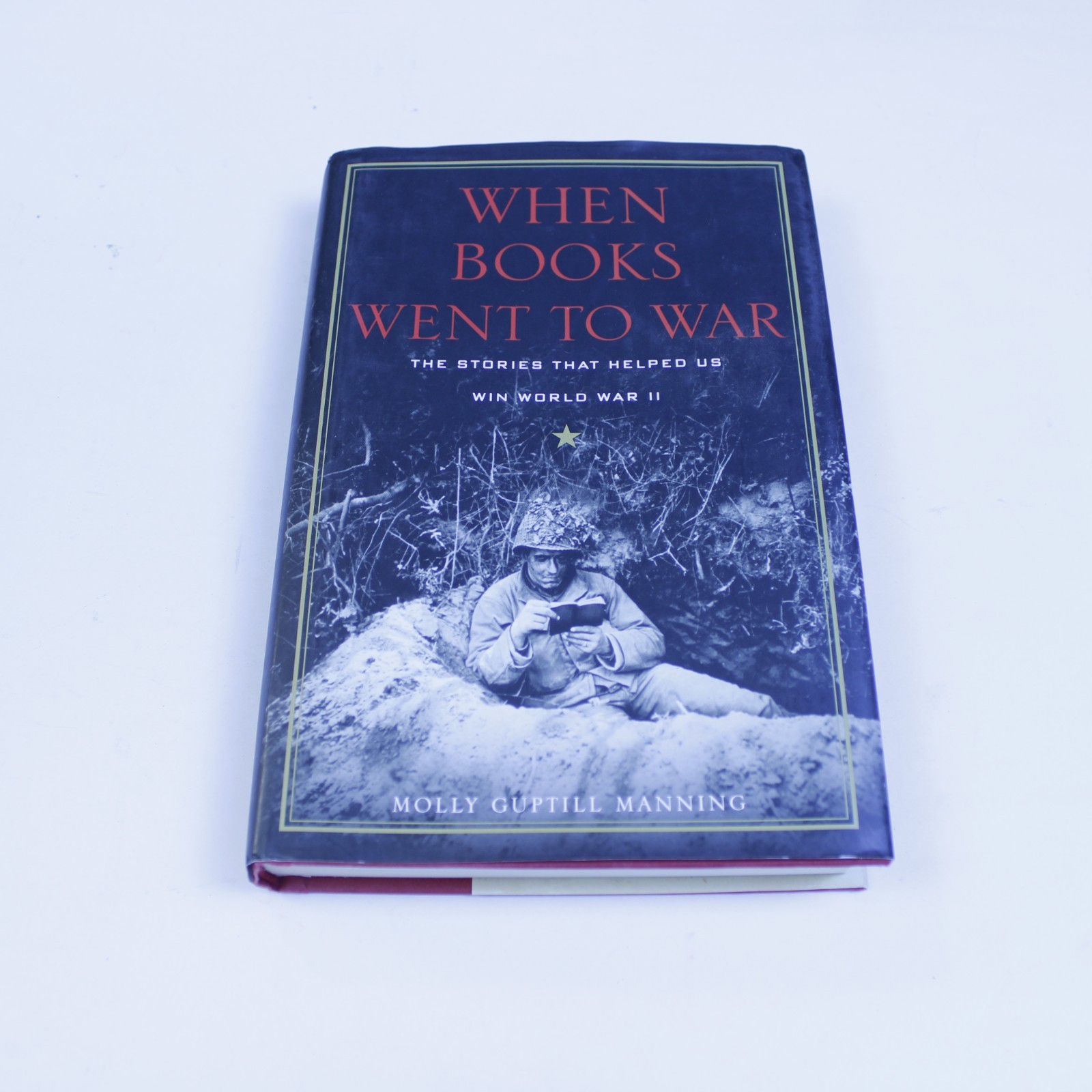

During World War II, the United States government did something extraordinary: it shipped 120 million paperback books to American soldiers overseas. The books were small enough to fit in a uniform pocket, cheap enough to be disposable, and so beloved that soldiers wrote fan mail to the authors. When Books Went to War by Molly Guptill Manning tells this almost-forgotten story — and it is one of the most heartening history books you will ever read.
About the author
Molly Guptill Manning is a historian and author. She holds a law degree and has written extensively on American history, with a focus on the cultural history of World War II. When Books Went to War (2014) grew out of her discovery of the Armed Services Editions — the pocket-sized paperbacks printed by the millions for American troops — and it became a New York Times bestseller and a favorite of book clubs across the country.
The story
The book opens with the book burnings of Nazi Germany — the moment that made Americans realize books themselves were a battleground. In response, a group of librarians, publishers, and government officials launched the Victory Book Campaign, collecting millions of donated books for soldiers. But donated books were heavy, awkward, and often the wrong titles.
The solution was the Armed Services Editions: specially designed paperback books, printed in a size that fit a uniform pocket, produced by the millions. Over 1,200 titles were published — from classics to mysteries to humor — and they transformed what it meant to be a soldier with free time. The books boosted morale, connected troops to home, and, in the words of one soldier, “kept us sane.”
What works
- The story itself. It is genuinely remarkable and almost unknown.
- The research. Manning brings the era to life with letters, diaries, and archival records.
- The emotional weight. The letters from soldiers about what the books meant to them are moving.
- The broader argument. The book shows how the fight against Nazi book-burning was won with books.
What does not work
- The narrative is occasionally dense with names and statistics.
- Readers wanting a fast, plot-driven read should look elsewhere — this is history, and it reads like it.
Who should read it
Read it if you love books about books, World War II history, or stories of quiet American heroism. It is a perfect pick for book clubs, history buffs, and anyone who has ever loved a paperback.
Verdict
5 out of 5. A wonderful, heartening piece of history that deserves to be far better known. Manning tells the story of how America fought the Nazis with paperbacks — and the result is a book that will make you proud of what books can do. If you love reading, you owe it to yourself to read this.
Frequently asked questions
What is When Books Went to War about?
The story of the Armed Services Editions — 120 million pocket-sized paperbacks printed for American troops during World War II — and how books boosted morale and helped win the war against Nazi book-burning.
Who wrote When Books Went to War?
Molly Guptill Manning, a historian and author.
How many books were sent to soldiers?
Approximately 120 million paperback books, across more than 1,200 titles.
Is When Books Went to War a good book club pick?
Excellent — it is a New York Times bestseller that has been widely praised as a favorite of book clubs.
Is When Books Went to War based on a true story?
Yes — it is a work of nonfiction history, thoroughly researched from letters, diaries, and archives.
Leave a Reply
You must be logged in to post a comment.