
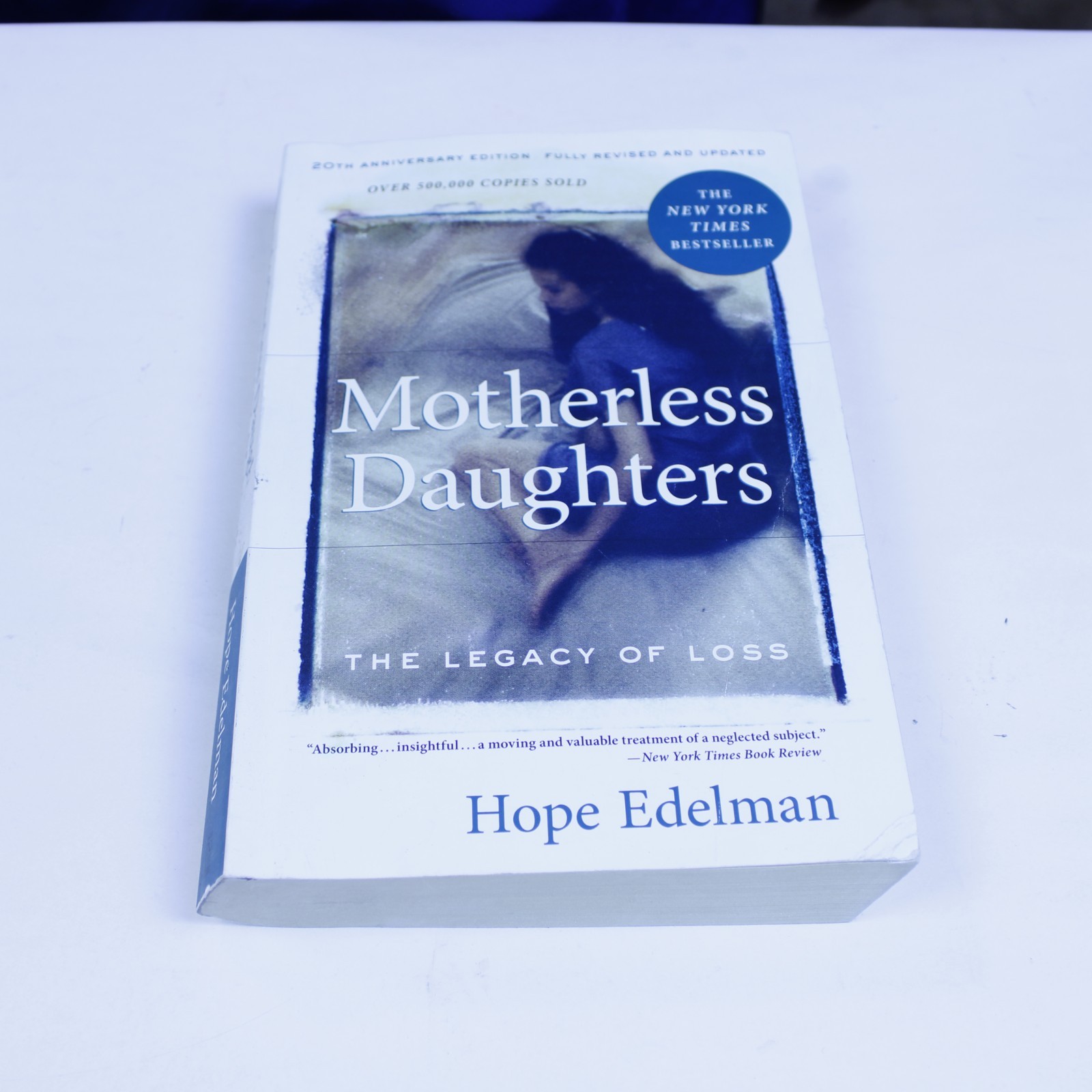

Some books become classics because they are beautifully written. Motherless Daughters (1994) by Hope Edelman became a classic because it told the truth. It is the book that finally gave words to an experience millions of women had been carrying in silence: the loss of a mother, and the way that loss reshapes a life. Twenty-five years after publication, it is still the definitive book on the subject — and it is still essential reading.
About the author
Hope Edelman was twenty when her mother died of breast cancer. In the years that followed, she found that the grief literature had almost nothing to say about the specific experience of losing a mother — so she set out to write it herself. She interviewed hundreds of motherless women and drew on her own experience to write Motherless Daughters, which became a New York Times bestseller and has never gone out of print. She has since written Motherless Mothers and The AfterGrief, and she remains the leading voice on maternal loss.
What the book covers
The book is organized around the stages of a daughter’s life and how the loss of a mother affects each one. Edelman writes about the immediate aftermath of loss, the teenage years without a mother, the young adulthood of navigating love and independence without her guidance, and the profound moment of becoming a mother oneself without a mother to call.
It is built on research and interviews, but it reads like a conversation. Edelman weaves the stories of the women she interviewed with her own story, and the result is a book that makes you feel seen — whether you lost your mother at five or at fifty.
What works
- The validation. The book names experiences that women have been told are too personal to discuss.
- The research. It is grounded in real psychology, not just anecdote.
- The structure. Organized by life stage, it speaks directly to where you are.
- The hope. It is honest about the pain — and honest about the possibility of a full life afterward.
What does not work
- It is an emotionally heavy read — it will bring things up.
- Some of the research is dated; the core insights, however, have not aged.
Who should read it
Read it if you have lost your mother. Read it if you love someone who has. Read it if you want to understand an experience that shapes millions of women — and, in a different way, their children. It is also a profound read for anyone who works with grieving people.
Verdict
5 out of 5. A landmark book that changed how we talk about grief. Hope Edelman wrote the book she needed — and in doing so, she wrote the book millions of women needed. It is honest, compassionate, and deeply researched, and it remains, decades later, the essential work on maternal loss. If it applies to you or someone you love, read it.
Frequently asked questions
What is Motherless Daughters about?
The definitive book on the experience of losing a mother — how the loss affects daughters at every stage of life, based on research and hundreds of interviews.
Who wrote Motherless Daughters?
Hope Edelman, who lost her own mother at twenty and wrote the book that became the classic work on maternal loss.
Is Motherless Daughters based on research?
Yes — it draws on interviews with hundreds of motherless women and on psychological research, alongside Edelman’s own experience.
Is Motherless Daughters only for women who lost their mothers young?
No — it addresses loss at every age, from childhood to adulthood, and is also valuable for anyone supporting a grieving person.
Is Motherless Daughters a sad book?
It is honest about grief, but it is ultimately hopeful — it is about living a full life after loss.
Leave a Reply
You must be logged in to post a comment.