
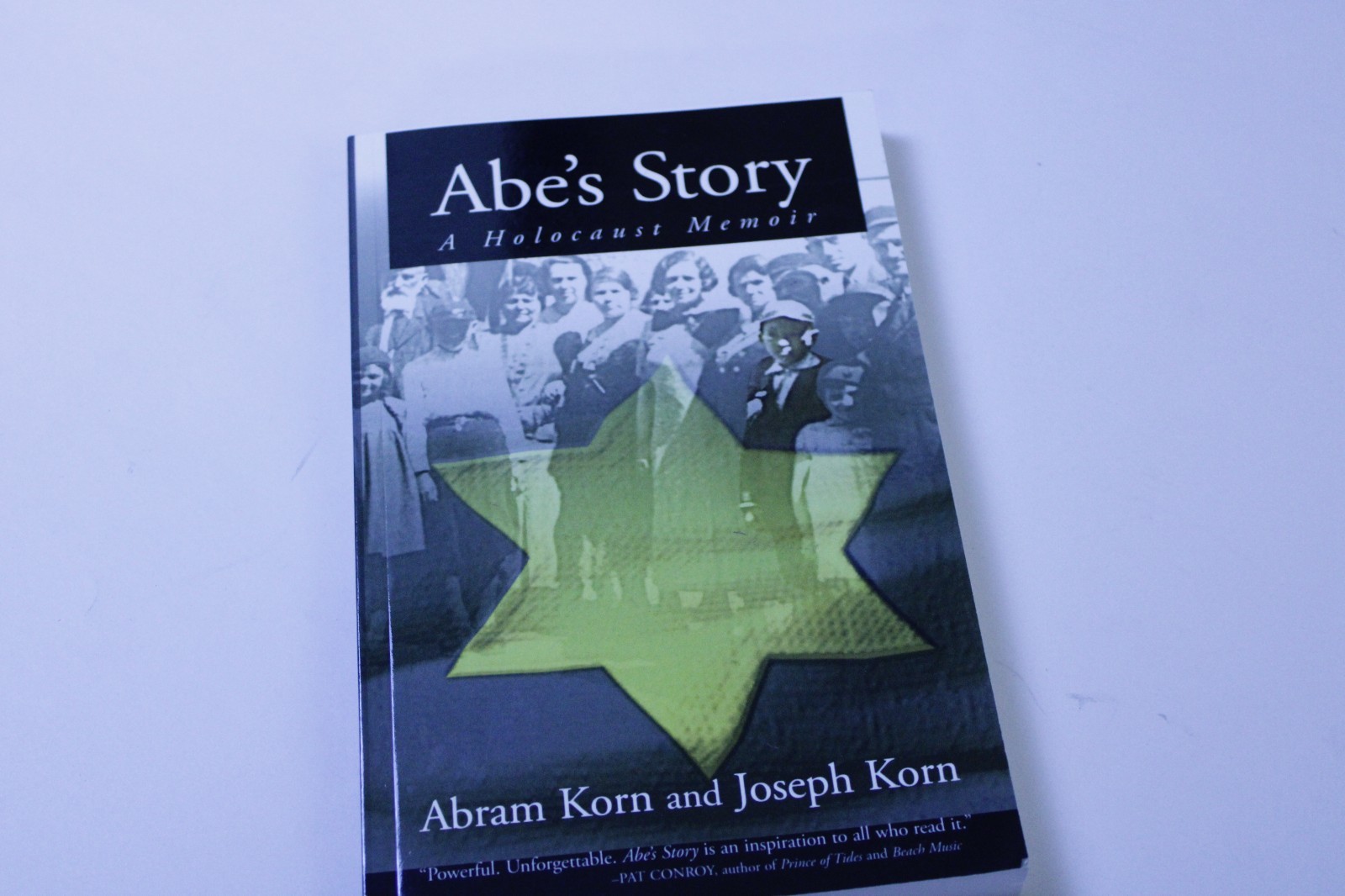

There are many Holocaust memoirs, and each one matters — but Abe’s Story is different in a way that is hard to forget. Abram Korn was sixteen when the Nazis invaded Poland. He survived nine concentration camps, including Auschwitz, over six years. He wrote this memoir not for fame, but because he made a promise: to tell the world what he saw, so that it would never happen again. The result is a book of extraordinary restraint and power.
About the author
Abram Korn was born in 1924 in Lipno, Poland. When Germany invaded in 1939, his family was forced into the ghetto, and then into the camps. He survived Auschwitz, Buchenwald, and seven other camps — a survival story of almost unimaginable odds. After the war he emigrated to the United States, built a new life, and raised a family. He wrote Abe’s Story late in life, with the help of his family, to fulfill the promise he made to himself in the camps: to bear witness.
The story
The book follows Korn from his childhood in Lipno through the invasion, the ghetto, the transports, and the camps. It is told with remarkable clarity — Korn does not sensationalize, does not dramatize. He simply records what happened, in the plain language of a man who saw too much and decided the truth was enough.
The details are harrowing: the selections, the starvation, the brutality of the guards, the constant presence of death. But the book is also a story of survival — of the small acts of kindness between prisoners, the will to live, and the luck that separated the living from the dead.
What works
- The voice. Korn’s plain, direct narration gives the book an authenticity no novelist could match.
- The scope. Nine camps over six years — the sheer scale of what he endured is staggering.
- The purpose. This is testimony, written to bear witness, and it carries that weight on every page.
- The hope. Despite everything, the book is not despairing — it is a record of survival.
What does not work
- It is a difficult read, emotionally — the subject matter is unrelenting.
- Readers looking for a literary memoir will find a plainspoken account instead.
Who should read it
Read it if you read Holocaust literature, if you want to understand what ordinary people endured, or if you believe in the duty to remember. It belongs alongside Night by Elie Wiesel and Man’s Search for Meaning by Viktor Frankl as essential testimony.
Verdict
5 out of 5. A plainspoken, devastating, essential memoir. Abram Korn survived nine concentration camps and wrote this book so the world would remember — reading it is an act of witness. It is not an easy book, but it is an important one, and it will stay with you long after the last page.
Frequently asked questions
What is Abe’s Story about?
A Holocaust memoir by Abram Korn, who was sixteen when the Nazis invaded Poland and survived nine concentration camps, including Auschwitz, over six years.
Who wrote Abe’s Story?
Abram Korn, written with the help of his family late in his life to fulfill his promise to bear witness.
How many camps did Abram Korn survive?
Nine concentration camps, including Auschwitz and Buchenwald.
Is Abe’s Story suitable for young readers?
It is appropriate for mature teens and adults; the subject matter is harrowing and should be approached with that in mind.
How does Abe’s Story compare to other Holocaust memoirs?
It stands alongside Night and Man’s Search for Meaning as essential first-person testimony, told in a plain, powerful voice.
Leave a Reply
You must be logged in to post a comment.