
There is a phone call that every family dreads, even if they cannot quite put a name to the dread until it has already happened. Maybe it is your sister, her voice gone thin on the other end of the line, telling you that mom could not find her way home from the grocery store she has been shopping at for twenty years. Maybe it is your own husband, coming back from the doctor’s office not with a clean bill of health but with a word he has to say twice because he can barely believe it himself. Or maybe it has not happened yet, not in the dramatic, movie version, but you have started to notice the small signs. The keys that are never where they should be. The checkbook balances that do not add up. The same question asked three times in an evening, each time with the same puzzled, apologetic little shake of the head. Whatever form it takes, the moment arrives when a family realizes it is now living inside a journey they never asked to board, and every single one of us who has been there knows how lonely that place feels. It is the loneliest crowd in the world, actually, all those families standing right beside one another in the same bewildered fog and yet each believing they are the only ones who cannot find the map. That is the exact moment this book finds you. That is the exact moment Navigating The Dementia Journey steps in and quietly, methodically, starts to lay out what the road ahead really looks like.
I want to be honest with you about what this book is and is not, because I think that honesty serves you better than any clever sales pitch ever could. This is not a medical textbook, and despite what a busy doctor’s waiting room might suggest, it is not a dry reference manual meant to sit unopened on a shelf until some emergency forces you to dust it off. It is something more useful than both of those things. It is a companion. Navigating The Dementia Journey is published by and represents the practical, down-to-earth guidance of the Dementia Society of America, an organization that has spent its working life trying to do one simple and almost impossibly hard thing, which is to take the terror out of a diagnosis and replace it with direction. The book walks the reader through the three corners of this experience that matter most, understanding what is actually happening in the mind and the body, figuring out how to provide day-to-day care that keeps both the person and their caregiver grounded, and planning for what comes next in a way that reduces rather than increases stress. It is written for families. It is written for caregivers. And crucially, it is written for the person living with the diagnosis who wants to understand their own path too.
Let me say something about why this matters, because I do not want to hand you a book and pretend that is the whole answer. Dementia is not one disease, and understanding that single fact early changes everything about how you cope with it. There are different forms, different rates of progression, different mixes of memory and mood and movement symptoms, and no two people travel it in quite the same way. What the medical community knows, and what a guidance resource like this one gathers into one place, is that the people who fare best, both the ones living with the condition and the ones caring for them, are the people who understand the terrain. They are the ones who know what to expect, which is not the same as being okay with it, but it is a form of armor. They know that behaviors which look like anger or stubbornness are often confusion or fear wearing a disguise. They know that some steps can be slowed, some quality of life can be preserved, some independence can be prolonged, and some truly good days can still be had. That knowledge does not come from nowhere. It comes from guidance, from hearing from people who have done this before, from a book that refuses to let you stumble around in the dark when the light is available at a price almost anyone can afford.
I should also be plain about the fact that caregiver burden is real, heavy, and profoundly under-discussed. If you are the person quietly reading this in the kitchen late at night while the household sleeps, chances are good that you are the one carrying an enormous load right now. You are the memory-keeper, the appointment-maker, the patience-supplier, the one who has learned to say the same reassuring words over and over without flinching. And you are tired in a way that is hard to explain to people who have not lived it. This book sees you. That is one of the quiet reasons it exists. A resource built around the caregiver’s journey does not just offer tips, it offers permission, permission to acknowledge your own fatigue, permission to reach for help, permission to plan for the long haul without feeling like you are failing someone by being honest about the way things actually are. Navigating The Dementia Journey treats caregiving as the marathon it truly is, which means it talks about pacing, about support, about the moments of joy and connection that can still be carved out of even the hardest seasons. That kind of honest, steady presence in a book can be worth more than any single tip inside it.
Let me move from the big picture to the practical, because that is really where a helpful guide earns its keep. A well-built resource like this one answers the questions that keep families up at night. What changes can I make to the home to keep things safer and calmer? How do I communicate with someone whose memory is slipping without turning every conversation into a tense confrontation? When is the right time to talk about driving, about handling money, about the harder conversations nobody wants to have? How do I choose among the care options that exist out there, and how do I navigate the emotional guilt that attaches itself to every single choice? What should I actually expect as time goes on, and how do I prepare in a way that protects everyone? These are not small or shallow questions. They are the everyday substance of the dementia journey, and a guide that treats them seriously is respecting the reality that most families are living right now. The value of a book like this is that it gathers the collective experience of a national organization and hands it to you at a moment when you may not yet know what questions to even ask.
There is a reason resources like this one resonate so strongly with so many families, and it is not sentimental fluff. It is the deep truth that we are not built to face this alone, and we were never meant to. The sense of isolation that surrounds dementia is notorious, not least because there is no tidy endpoint where you get to declare victory and move on. The journey stretches, and the people on it, especially the caregivers, often quietly retreat from a social life that no longer feels reachable while everyone else in their old circle goes on living normally overhead. A guide that acknowledges that isolation, that speaks directly to you about the weight of it, and that points toward the supports and structures that exist precisely for people in your shoes, is not just informative. It is a lifeline. It says out loud, you are not the only one walking this path, and there are things you can do, and there is help, and it is okay to take it. For many people, simply hearing that from a credible, caring source changes how the whole experience feels from the inside out.
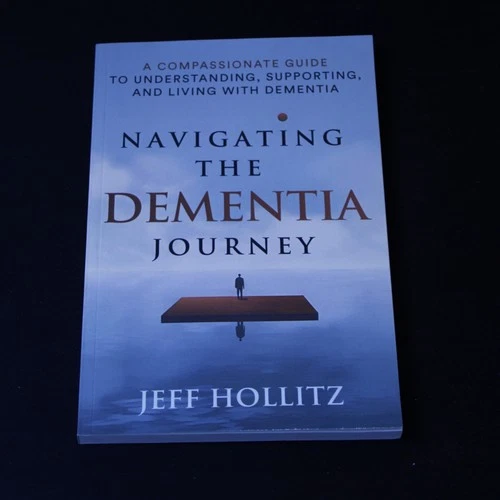
I have written about what the book does. Let me briefly describe the actual item, because knowing you are getting the real thing matters. The specific listing I am showing you carries the full title Navigating The Dementia Journey and comes from the book line connected to the Dementia Society of America, which should reassure you immediately that you are holding organized, organization-backed guidance rather than an anonymous pamphlet. The listed condition is Brand New, and I want to pause on that word for a second because it genuinely matters here. This is not a shelf-worn library copy that has been passed through a dozen hands, not a bargain table leftover with bent corners and pencil scrawls in the margins. It is a fresh, unread, untouched copy, spine intact, pages crisp, ready to be the clean new beginning that a family in this situation often needs. When a subject is this personal, and when the book is likely to be kept close through a long stretch of a family’s life, starting with a brand new copy carries a real, quiet significance. None of the wear. None of the prior owner’s annotations. Just the clean guidance, all yours.
Now let me talk about getting it to you, because I know that the practical question on your mind may be less exotic than the emotional one. This copy is being offered by the seller Wiredwizard, and the emphasis in this particular listing is on speed and care. If you have ever ordered something important and then spent days watching a tracking page spin its wheels, you understand why I bring this up. The idea behind the handling here is simple. Once you place your order, the intent is to get this book off the shelf and into the mail promptly, because when you need a resource like this, you do not want to wait weeks to hold it. And because the item needs to survive the trip in the shape it leaves the seller, it will travel inside proper protective packaging, the kind of thoughtful wrapping that keeps corners square, covers clean, and pages safe from the bumps and jostles of transit. It seems like a small thing, protective packaging, but anybody who has received a bent book in a flimsy mailer knows it is actually one of the most important things about the whole transaction. Fast shipping plus careful wrapping equals a book that arrives looking like the brand new item it is listed as.
Let me also be straight with you about the price, because it is one of those moments where I suspect you will do a double take. The listed price for this Brand New copy of Navigating The Dementia Journey is just under five dollars. I want you to read that again, because it is genuinely remarkable when you sit with it. Here is a practical, caring, organization-backed guide to one of the most difficult life journeys a family can face, and it is being offered at a price that falls below what many people spend on a coffee and a snack. That low price is not a sign of low value. It is a reflection of the seller’s belief that this kind of help should get to the people who need it, and an honest recognition that caregivers and families often have their budgets stretched thin by the very situation this book addresses. You are not paying a premium because you are desperate and have no choice. You are paying an accessible price for a genuinely useful resource, which is the best possible combination for a purchase like this.
Now, if you are hesitating, let me try to address the hesitation directly, because I have seen this exact pattern play out in dozens of families. You might be telling yourself that you already know your loved one, and that no book can tell you anything about the person you have known your whole life. That is true, and this book would never insult you by pretending otherwise. But knowing a person is not the same as knowing the condition, and the condition has its own rhythms and its own demands that surprise even the closest families. You might also be telling yourself that you are too busy to read a full book, which I understand, you are swamped, that is the whole premise of the situation. But a well-built guide is not a novel you have to finish in one sitting. It is a resource you can open at the chapter you need on the day you need it, the section on communication, the section on home safety, the section on planning, dipping in as life requires. Sometimes the most useful book is not the one you read cover to cover but the one you reach for again and again, and that is exactly the way a practical guide is meant to live in your home.
And I want to say one more humane thing before I ask you to make the decision. Whether this book is for you, or for a friend, or for a sibling, or for a neighbor who is quietly drowning and will not ask for help, passing along a resource like this is a form of love. So often the families who need guidance the most are the ones least likely to ask for it, because asking carries the flavor of admitting they cannot handle things, which of course is nonsense, everyone in this situation needs help, that is the whole human condition of it. When you send someone a caring, practical guide, you are reaching across that silence and saying, I see you, and here is something concrete that might lighten the road. That is a generous act, and it is available to you right now for the cost of a snack. It is hard to think of a better ratio, honestly, a small amount of money spent to hand someone a measure of clarity and direction on one of the steepest roads in life.
Let me wrap this up, but not with a flourish, with a straight answer about what this listing is and is not. It is a Brand New, organization-backed practical guide to the dementia journey, available at an almost unbelievably low price, shipped quickly and wrapped with care. It is not a cure, and it would never pretend to be one. What it offers is something rarer and almost more precious anyway, which is understanding, direction, and the quiet, steady reassurance that you are not walking this path alone. If that is what you need, or what someone you love needs, then there is no reason to wait. The book is here, it is new, it is affordable, and it is ready to travel to you. I genuinely hope it gives you the steadiness you are looking for, and I will leave the next step entirely in your hands. Whether you take it today or save it for the day you need it is entirely up to you, but the book will be here, a clean, unread copy, waiting to help the moment you are ready.
AI FAQ — Navigating The Dementia Journey
1. What is this book about?
It is a practical, families-and-caregivers-focused guide to understanding and navigating the experience of a dementia diagnosis. Published through the book line connected to the Dementia Society of America, it focuses on understanding the condition, day-to-day care, and planning for the road ahead.
2. Is this book written for caregivers or for the person with the diagnosis?
It is really written for the whole support circle. It is especially valuable to family caregivers, but it also respects the person living with the diagnosis and works well as a resource the entire family can come back to together.
3. Is this a medical textbook or academic work?
No. It is a practical guidance resource, not a medical or academic textbook. It is meant to be opened and used in everyday life, with sections you can dip into as the journey requires, rather than something that sits on a shelf.
4. Why would a resource from the Dementia Society of America matter?
It matters because it is organization-backed guidance with a caring, practical focus. Rather than an anonymous pamphlet, this comes from a known national organization devoted to supporting people affected by dementia, which gives the guidance credibility and consistency.
5. What practical topics does this kind of guide typically cover?
Topics usually include understanding the different forms of dementia, improving home safety, communicating with someone whose memory is changing, handling the harder conversations, planning for care options, and supporting caregivers through the long haul.
6. I am just one person. Can a book really help me with such a big situation?
It can help in a genuine, practical way. Even if it cannot change the medical reality, it can reduce anxiety by giving you direction, showing you what questions to ask, and reassuring you that you are not alone. Much of the stress in this situation comes from feeling lost, and guidance directly addresses that.
7. What condition is this copy in?
This specific copy is listed as Brand New. It is an unread, untouched copy with a clean spine and crisp pages, free of prior wear, marks, or annotations.
8. How is this book being shipped?
The intent is to ship promptly after your order so you are not waiting, and the book travels in careful protective packaging designed to keep the corners square, the cover clean, and the pages safe through transit.
9. How much does this copy cost?
The listed price is under five dollars, which is a remarkably accessible price for an organization-backed practical resource. The low price reflects the goal of getting this kind of help to the families who need it, not a lack of value.
10. Is this book meant to be read cover to cover?
Not necessarily. It is a practical guide, so you can open it at the section you need on the day you need it, whether that is communication, home safety, or planning. It is the kind of book people reach for repeatedly rather than finish once.
11. Would this be a thoughtful gift for someone else caring for a loved one?
Yes, very much so. Many caregivers do not ask for help, so a caring resource handed to them can be a meaningful way to show support and give them something concrete and useful without them having to ask.
12. Does this book claim to cure dementia?
No. It would never make such a claim. Its purpose is understanding, direction, and reassurance, helping families and caregivers manage the journey with more clarity and far less isolation.
Buy it on eBay
Get this item now at the Wiredwizard eBay store: this listing on eBay.