
Switzerland Travel Guide by Rick Steves – The Complete 2026 Planning Companion
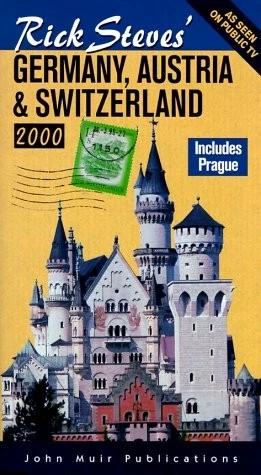
Sometimes a destination behaves less like a place than like a puzzle, and Switzerland is exactly that kind of country. It is compact geographically, yet it stacks several distinct worlds into a space smaller than a single American state: the orderly German-flavored streets of Zürich and Bern, the crisp French cadence of Geneva and Lausanne, the proud Italian temperament of Lugano on its southern edge, and that quiet Romansh murmur buried deep in the Grisons valleys. Add to that the most dense rail network on the planet, a stubborn mountain fortress that closes lifts at the slightest sign of weather, and prices that make first-time visitors wince, and you have a destination where preparation is not optional. That is precisely the gap this book is built to close. This is a fresh, never-opened copy of the Switzerland Travel Guide by Rick Steves, published and ready to travel with you, available through the Wiredwizard eBay store.
Rick Steves has built a travel empire on a single straightforward premise: that the person best equipped to plan your day in Europe is not a hotel concierge or a tour bus operator, but a citizen who has personally walked the route, eaten at the same tables, and made every mistake a traveler can make. His Switzerland guide is the distilled result of decades of those walks. Where guidebooks tend to read like phone directories of sights, Steves reads like a patient friend who has already been there and now wants to save you both money and time. Every recommendation in these pages, from the bakery worth the queue in the old town of Bern to the Montreux Riviera lakeside stroll that costs nothing at all, carries the confidence of someone who has actually done it rather than copied it from a press release.
The genius of this particular guide lies in its honesty about the financial reality of the country. Switzerland is expensive, and pretending otherwise helps nobody. Steves does not sugarcoat the five-franc bottle of water or the surprisingly priced fondue pot in a lakeside village, but he lays out a systematic answer to those costs that a traveler can genuinely follow. The self-catering apartment recommendations in the major cities, the rail passes that pay for themselves once you have counted a couple of day trips, the grocery store chains where a picnic lunch costs a fraction of a restaurant bill, and the overnight strategy of sleeping just outside the pricey resort towns to gain the same views a few minutes from down the valley. These are tactical details that no bland listing of sights will give you, and they are worth the cover price on their own.
A destination guide has to decide how it will treat the mountains, because the Alps define the country at every turn and are the reason most people fly here in the first place. Steves devotes a serious stretch of this book to the high alpine, not as scenery to be admired from a postcard but as a resource to be planned and booked. The Jungratau rail excursion to the summit station that stands higher than any other, the Matterhorn base in Zermatt with its car-free streets and its tiny electric taxis, the Bernina Express winding its way along the full length of a valley, and the steep funiculars that serve as the only way up several famous ski depressions — all appear with the practical details that make them achievable rather than simply desirable. He tells you which day trips need a reservation weeks ahead and which you can decide the morning of, without falling into vague advice.
His restaurant advice has the same grounded quality. Pages of the guide are given over to the small, family-run dairy restaurants, the cheese restaurants that put half a wheel of local racle on your plate, the unassuming tearoom where the density of locals is the single best sign of quality, and the stations of the traditional multi-course meal that a traveler should order slowly rather than as a single sit-down. There is even a section on how to order the regional specialties in each of the country’s language regions, so a restaurant menu in French does not turn into an improvised game of chance. For anyone who has ever stood in a foreign dining room embarrassed to ask, this alone is worth the price.
At its heart this stays a book for the independent traveler who plans, but it does not shy away from giving you the clear structure that planners really want. Every major city chapter is organized around a suggested walking route, annotated with which stops to linger at and which to simply walk past, and punctuated with honest time estimates. Shaferton chapel, the Bear Pit, the clock tower of the old town — all are placed in a sensible order so a single afternoon covers them without backtracking, and the guide is thoughtfully aware that most readers have three days in a city, not three weeks. That focus on time as the most valuable currency you carry is the thread that holds the entire work together.
For the traveler who wants more than the main squares, the guide pushes into the corner of the country that most itineraries miss entirely. Chapters cover the lesser-known valleys of the south, the monasteries that hang over lakes, the mountain passes where you can stand at the head of a fork and look into two countries at once, and the sunny lakeside towns that feel far lighter than the heavy alpine atmosphere. Steves is especially generous with the Grisons, the remote eastern region with Roma ancient language, its own culture, and some of the quietest train stations in the country. It is in these pages that the guide moves from a simple itinerary tool into something closer to a love letter to a country that rewards the traveler who leaves the famous route.
Two things about this book stand out to us as booksellers and readers. The first is its straightforward, trustworthy tone, a voice that has earned Steves a devoted following precisely because it does not oversell any view, hotel, or restaurant. The second is the thickness of it; this is a genuinely substantial guide that does not shave corners. Even a savvy traveler who has visited Switzerland before will find a chapter or a route they have not considered, and a first-time visitor will finish the trip-planning chapter with a complete, doable itinerary rather than a vague sense that someone should plan it.
Because we are primarily a book store, we are picky about the condition of what we do, and this copy is Brand New condition, meaning it has never been read, never been opened, and no pages are marked, torn, dog-eared, or highlighted. You are getting the guide exactly as you would find it on a listing from a bookseller who has not yet opened the shrink-wrap. That is the state travelers want when the book is about to ride in cargo to the airport, fit in a jacket or bag, and be opened only at the gate.
This listing ships from us within a day of order and arrives packed in a protective mailer so the corners and edges survive the trip. We know from experience that a destination guide lives and dies on how it is handled before it is used, so we package the book flat and boxed it when possible to keep the binding tight and the cover free.
We encourage you to buy this copy now while the eBay listing still stands, because our store moves a large number of these travel companions and a book that sits open in front of a traveler does not wait for a second thought. Grab the listing from the button on this page and you will receive a genuinely Brand New travel guide, written by the most trusted name in European planning, that will walk you through Switzerland from the first rail ticket to the last fondue pot.
1. What exactly is the Switzerland Travel Guide by Rick Steves?
It is a comprehensive, practical guidebook written by the American travel author Rick Steves, published to guide independent travelers through the entire country. This copy in our store is Brand New, unread, and unopened.
2. What regions of Switzerland does the guide cover?
It covers all of the country’s major regions, including the German-speaking cities of Zürich and Bern, the French-speaking west around Geneva and Lausanne, the Italian-speaking south around Lugano, and the primary alpine areas including the Jungfrau, the Matterhorn area around Zermatt, and the eastern Grisons.
3. What does this guide recommend for first-time visitors?
The guide recommends starting with the classic walking routes through the main cities, then linking them by rail using the country’s dense and efficient train network, and planning the higher alpine destinations with advance reservations during the busy summer season.
4. Are Bahn / rail passes covered in the book?
Yes. There is a dedicated planning section on transport, including how to evaluate the various rail passes and whether they pay for themselves based on your planned miles of travel, as well as regional options and practical mountain rail advice.
5. Is this a good guide for budget travelers considering the price of the country?
Yes. Steves is famous for budget-focused advice. The guide includes self-catering apartment stays, grocery chain suggestions, and tourist-avoiding restaurant choices that help a traveler manage Switzerland’s higher costs without sacrificing the experience.
6. Does the book include information on high-altitude tourism like the Jungfrau and the Matterhorn?
Yes. High-alpine travel is a central topic, with chapters on the Jungfrau region, the Zermatt and Matterhorn area, and the Bernina route, including practical advice on tickets, reservations, weather windows, and which excursions require planning.
7. Is this guide suitable for reading alone for someone who cannot do hiking?
The guide is for independent travelers. While it celebrates the mountains, it also covers the accessible cities, lake towns, museums, and cultural sights, so a visitor who prefers valley and museum experiences rather than hiking will still find a complete itinerary within its pages.
8. What condition is this copy in?
This is a Brand New copy. It is unread, unused, pages are all intact, the binding is tight, and the cover is unfastened. It is delivered as pristine stock condition, ready to take.
9. How quickly will it ship and in what packaging?
Our store ships items within one day of order. The book is packed flat in protective foam and sturdy packaging so the corners and binding survive the trip without damage.
10. What is the difference between this and the older or updated edition?
This is the current edition of the Switzerland Travel Guide available in our store and reflects the most up-to-date route, lodging, and pricing information the author has prepared for travelers planning their own itinerary.
11. Can I use this guide for a train-focused trip rather than a driving trip?
Yes, and it is distinctly suited to it. Switzerland is one of the countries most people prefer to travel by rail, and the author emphasizes rail-based itinerary in every chapter, so a train-focused trip is effectively what the whole book is built around.
12. Does the book include sample itineraries for different lengths of stay?
Yes. Steves provides adaptable route suggestions for stays ranging from a quick visit to two careful weeks, with step by step daily plans that you can mix and match rather than a single fixed route.
Where to buy and shipping from
This book is listed as Brand New on the eBay store, ships quickly, and comes packed to protect the condition you receive. Open the listing in the store now to place your order.
Buy it on eBay
Get this item now at the Wiredwizard eBay store: this listing on eBay.