
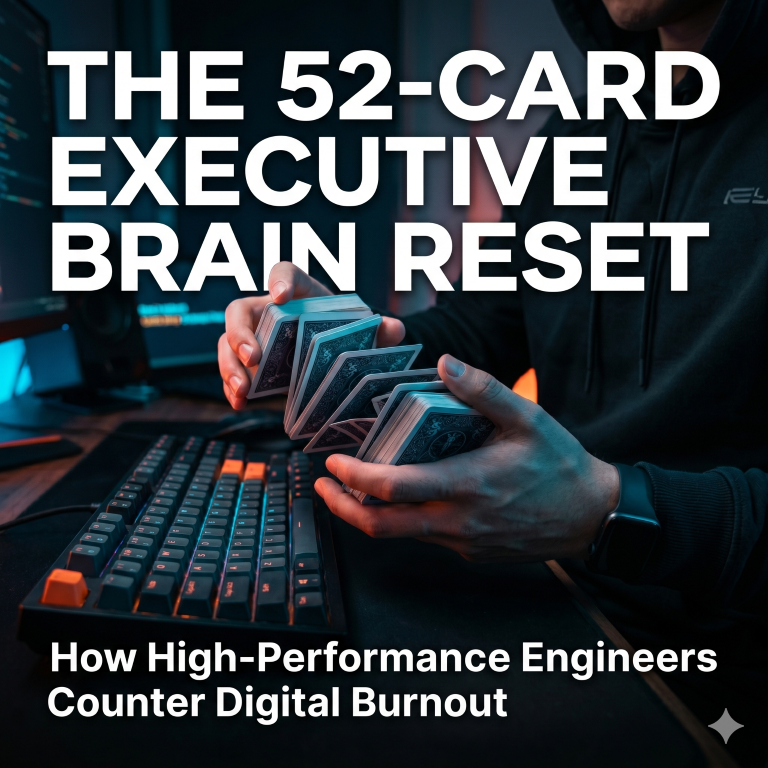

The Cognitive Drain of the Modern Tech Stack
The modern engineer’s brain is fried.
Between juggling microservice architectures, endless context-switching, and dopamine-depleting Slack notifications, your working memory is operating at a constant deficit. Your focus isn’t failing; it’s being fragmented by design.
While the average tech professional turns to overpriced nootropics or sensory deprivation tanks to claw back their attention span, elite operators are deploying a low-tech, high-velocity countermeasure: Cardistry.
This isn’t about magic tricks or impressing people at a bar. It’s about neurological calibration. Manipulating a 52-card deck with hyper-precise, independent finger movements forces the brain to engage in active, tactile problem-solving that instantly overrides digital fatigue.
The Neuroscience of Dexterity: Upgrading Your Mental Hardware
The Cortical Homunculus Advantage
Your brain dedicates a massive percentage of its motor cortex to your hands. When you execute a complex card flourish like the Sybil Cut or a Charlier Pass, you are lighting up your neural pathways like a Christmas tree.
-
Tactile Grounding: Forcing your brain to process physical friction, gravity, and micro-adjustments breaks the hypnotic loop of screen fatigue.
-
Proprioceptive Input: Elevating your spatial awareness forces immediate presence, obliterating the anxiety of uncompiled code or missed deadlines.
-
Bilateral Integration: Using both hands independently compels the left and right hemispheres of your brain to communicate at a higher velocity.
Entering the Flow State on Demand
Flow state requires a precise balance of challenge and skill. Cardistry provides an immediate feedback loop. If your grip is off by a millimeter, the deck drops.
This instant penalty system forces absolute concentration, acting as a manual override to clear your cognitive cache. Spend five minutes mastering a Thumb Fan, and you return to your IDE with a clean slate and sharp focus.
The Micro-Break Workflow: Implementing Cardistry into the Sprint
Do not overcomplicate this. Treat a deck of cards like a physical macro for your brain.
The 90-Minute Reset Protocol
-
The Trigger: Hit a roadblock in your code or finish a grueling sprint review.
-
The Disconnect: Step away from the monitor. Pick up a premium, high-crush stock deck.
-
The Drill: Spend exactly 4 minutes practicing a single mechanics grip or cut. Focus entirely on the tension in your tendons.
-
The Return: Drop the deck. Sit back down. Execute.
[90-Min Deep Work Block] ? [4-Min Cardistry Reset] ? [Immediate Dopamine Reset] ? [Next Sprint]
High-Velocity Turnover Tips for Beginners
-
Choose the Right Stock: Skip the cheap plastic cards. Use Bicycle or specialized cardistry decks with an air-cushion finish for optimal slide and friction control.
-
Embrace the Drop: Dropping the cards is the physical equivalent of a compiler error. Clean it up, debug your finger placement, and run it again.
Core Insights
Q: How does cardistry compare to traditional mindfulness for stress reduction?
A: Traditional mindfulness requires passive focus, which tech professionals often find frustrating. Cardistry utilizes active meditation. By engaging the motor cortex and requiring physical precision, it forcefully occupies the working memory, cutting off stressful thought loops faster than passive sitting.
Q: Can practicing card flourishes improve typing speed or programming stamina?
A: Yes. Cardistry builds intrinsic hand strength, dexterity, and joint flexibility. By training independent finger movement, it mitigates repetitive strain injuries (RSI) and carpal tunnel symptoms common among engineers, directly extending typing stamina.
Q: Why are playing cards preferred over fidget spinners or mechanical toys?
A: Fidget toys require zero skill and become passive, mindless habits. Cardistry has an infinite skill ceiling. It demands continuous learning and adaptation, which stimulates neuroplasticity and executive function rather than encouraging mindless distraction.
Level Up Your Mental Architecture
True efficiency requires the right data. If you are ready to stop burning out and start optimizing your cognitive performance, your business operations, and your personal systems, it’s time to upgrade your library. Discover the blueprint for high-velocity execution and tactical thinking.
Grab your next definitive guide at Wiredwizards Store.