
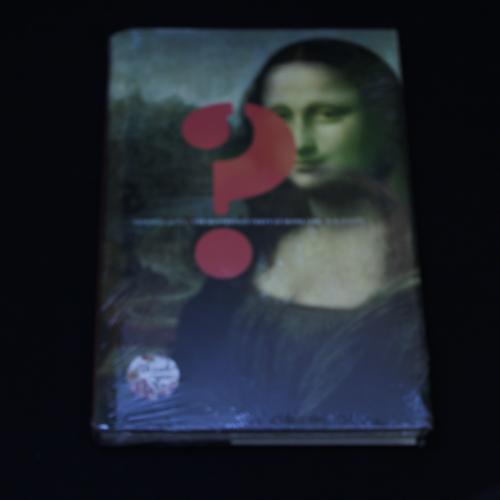

BUY IT NOW : Vanished Smile The Mysterious Theft of the Mona Lisa by Author R. A. Scotti Book
History Essential: Vanished Smile: The Mysterious Theft of the Mona Lisa by R. A. Scotti – The Definitive 1911 Louvre Heist Review and Collector’s Guide
Vanished Smile: The Mysterious Theft of the Mona Lisa by R. A. Scotti is the definitive narrative non-fiction reconstruction of the August 21, 1911 theft of Leonardo da Vinci’s La Joconde from the Salon Carré of the Louvre Museum in Paris. Published by Vintage Books in 2009, this 256-page historical true crime account transforms a poorly documented museum security failure into a detailed cultural history of the Belle Époque, the Paris Prefecture of Police, and the invention of modern celebrity art crime. Scotti, a historian and novelist, synthesizes police dossiers, trial transcripts from Florence, and contemporary reportage from Le Temps and The New York Times to explain how a 30-year-old Italian handyman and former Louvre glazier, Vincenzo Peruggia, concealed the 77 cm x 53 cm poplar panel under his smock and walked out during routine maintenance hours.
For collectors and historians, this volume is not a general biography of Leonardo da Vinci but a focused microhistory of the two-year period when the painting was missing. It examines why the Mona Lisa became the most famous painting in the world only after it disappeared. Secure this item directly from our eBay store
Why the Mona Lisa Was Obscure Before 1911: The Heist That Created an Icon
Before August 1911, the Mona Lisa was respected by connoisseurs but not the singular global icon it is today. It shared the Louvre’s Grande Galerie with works by Titian, Veronese, and Correggio, and was often overlooked by tourists favoring larger, more dramatic French academic paintings. R. A. Scotti establishes critical context that other summaries omit: the painting had no bulletproof glass, no dedicated guard, and was secured by only four iron pegs. The Louvre’s photography policy and inventory system were so antiquated that the theft was not noticed for more than 24 hours, reported initially by painter Louis Béroud who arrived to sketch the gallery.
The international press frenzy that followed created the modern Mona Lisa mythos. Scotti documents how the absence generated value:
- Media Amplification: Over 100 detectives and the Bertillon system of anthropometry were deployed, while newspapers worldwide reprinted Alinari reproductions, making the face recognizable to millions who had never visited Paris.
- Security Paradigm Shift: The theft exposed the Louvre’s lack of cataloging and forced museums globally to adopt inventory photography, alarm systems, and restricted artisan access.
- Cultural Revaluation: For two years, blank space on the museum wall drew more visitors than the painting itself had, cementing La Joconde as a symbol of French national identity and loss.
- Art Market Impact: Forgeries and replicas surged, including the notorious Yves Chaudron affair, where an American con man sold forged Mona Lisas to collectors claiming they were the stolen original.
Inside Vanished Smile: What R. A. Scotti Delivers That Other Accounts Miss
Unlike encyclopedia entries or true crime anthologies that reduce the heist to a paragraph, Scotti provides full procedural and biographical depth across three narrative pillars: the crime, the bungled investigation, and the recovery.
Narrative Non-Fiction Structure and Readability
Scotti writes as a storyteller, not an academic. The book is structured chronologically from Peruggia’s employment at the Louvre in 1908 through his trial at the Corte d’Assise in Florence in June 1913. Each chapter uses primary sources, including Peruggia’s letters to his father and his correspondence with Florentine art dealer Alfredo Geri. The prose is witty, paced like a heist novel, and avoids dense footnote apparatus, making it accessible to general readers while maintaining historical authority. This makes it ideal for readers who find academic art history texts by Giorgio Vasari scholars or Louvre catalogs too dry for casual consumption.
The Investigation: Alphonse Bertillon and the Paris Prefecture of Police
A major information gain in Vanished Smile is its detailed critique of the 1911 investigation. Scotti explains how Chief of Police Louis Lépine and head of Anthropometry Alphonse Bertillon relied on the flawed Bertillonage identification system and ignored a clear thumbprint left by Peruggia on the glass display case. The book thoroughly covers the interrogation of high-profile false suspects, including avant-garde poet Guillaume Apollinaire, who was arrested and jailed for six days, and a 29-year-old Pablo Picasso, who was brought in for questioning for allegedly possessing Iberian statues stolen from the Louvre by Apollinaire’s secretary, Géry Pieret. Scotti reveals how xenophobia toward Italian immigrant workers blinded investigators to the simplest explanation: an insider artisan thief.
Vincenzo Peruggia: Patriot, Handyman, or Opportunist?
Scotti avoids simple hero-villain mythology surrounding Peruggia. The book presents Peruggia (born 1881 in Dumenza, Italy) as a house painter and glazier who had worked for contractor Vincent Coppier installing protective glass on Louvre paintings. Scotti analyzes his contradictory motives: Peruggia claimed patriotism, arguing that Napoleon had stolen La Joconde and it belonged in Italy, a claim historically inaccurate since King Francis I had legally acquired it from Leonardo. At the same time, Scotti documents Peruggia’s two-year concealment of the painting in a false-bottom trunk in his Paris apartment at Rue de l’Hôpital-Saint-Louis and his failed attempt to sell it for 500,000 lire to Giovanni Poggi, director of the Uffizi Gallery, via Geri in December 1913. The psychological portrait is nuanced, portraying a man both delusional and calculating.
Collector’s Guide and Edition Details
For book collectors, Vanished Smile is a modern essential in the art crime genre, categorized alongside titles like The Gardner Heist and The Rescue Artist. While not an antiquarian volume, its value lies in its subject matter crossover and its status as the only book-length English account dedicated solely to the 1911 theft.
| Specification | Detail |
|---|---|
| Full Title | Vanished Smile: The Mysterious Theft of the Mona Lisa |
| Author | R. A. Scotti (Rita A. Scotti) |
| Publisher | Vintage Books / Alfred A. Knopf |
| First Published | 2009 (Hardcover), 2010 (Paperback) |
| Subject | Art History, True Crime, Museum History, Belle Époque Paris |
| Genre | Narrative Non-Fiction, Historical True Crime |
| Key Entities Covered | Vincenzo Peruggia, Leonardo da Vinci, Louvre Museum, Uffizi Gallery, Pablo Picasso, Guillaume Apollinaire, Alphonse Bertillon |
| Condition to Seek | Complete text block, intact cover, no remainder marks, no ex-library stamps for maximum collector value |
Collector value is enhanced by association copies and first printings. The hardcover first edition with dust jacket is the most desirable for display libraries. Paperback copies in fine condition remain highly readable and giftable. As an eBay collectible, this title benefits from stable demand among true crime readers, art history students, and Louvre enthusiasts. It is a cornerstone for any library focused on Leonardo da Vinci, museum heists, or French criminal history.
Who Should Own This Book: Use-Cases and Reader Benefits
This title serves multiple distinct reader intents beyond casual history interest:
- Art History Students and Educators: Provides a case study on how cultural value is constructed by media and theft, perfect for coursework on museology and the cult of the masterpiece.
- True Crime and Heist Readers: Delivers a closed-case, low-violence heist with a clear perpetrator, investigation, and recovery, ideal for fans of The Feather Thief or The Art Thief who prefer historical rather than contemporary crime.
- Travelers and Louvre Visitors: Offers essential pre-visit context for understanding why the Mona Lisa is housed behind bulletproof glass in the Salle des États and why it commands hour-long queues.
- Gift Buyers and Shelf Curators: Functions as an accessible, witty gift for readers who enjoy narrative history that reads like fiction, with broad appeal beyond specialist art audiences.
The Historical Context: Paris, La Belle Époque, and the Birth of the Modern Media Frenzy
Scotti places the theft within the social fabric of La Belle Époque Paris (1871-1914), a period of rapid modernization, anarchist bombings, and rising nationalism. The French press, led by Le Petit Parisien and Le Journal, treated the theft as a national humiliation and demanded resignations from Louvre Director Théophile Homolle. The book explores how the investigation coincided with the development of modern forensic science, contrasting Bertillon’s failing anthropometric measurements with the emerging fingerprint science pioneered by Francis Galton that French police failed to utilize effectively. For two years, the empty wall became a pilgrimage site, demonstrating the power of absence in creating aura. When Peruggia finally attempted to repatriate the painting to Florence, Italy celebrated him briefly as a patriot before his conviction for theft and sentencing to seven months in prison. The Mona Lisa returned to Paris in January 1914 to a hero’s welcome, completing its transformation from Louvre inventory number 779 to a priceless global icon.
Owning Vanished Smile means owning the definitive explanation for that transformation. It answers not only how the theft happened, but why the world cared and how that caring permanently altered museum security, art law, and cultural heritage protection.
Secure this collectible edition on eBay before inventory rotates
Answers & FAQs
Is Vanished Smile by R. A. Scotti considered the definitive account of the 1911 Mona Lisa theft?
Yes, it is widely regarded as the most complete narrative reconstruction of the August 21, 1911 theft by Vincenzo Peruggia. Unlike brief magazine summaries, Scotti uses primary police records and contemporary press reports to document the full two-year investigation.
Does this edition of Vanished Smile include details on Picasso and Apollinaire as suspects?
Yes, Scotti dedicates significant coverage to the wrongful detention of poet Guillaume Apollinaire and the interrogation of Pablo Picasso by the Paris Prefecture of Police. This section illustrates how the lack of forensic infrastructure led to sensational false arrests.
What is the collector value of Vanished Smile for true crime and art history libraries?
Vanished Smile holds strong collectible value as a crossover title bridging art history, true crime, and Belle Époque cultural studies. First printings from Vintage Books (2009) with intact dust jackets are sought by collectors assembling Louvre and Leonardo da Vinci heist archives.
How accurate is R. A. Scotti’s portrayal of Vincenzo Peruggia’s motive?
Scotti presents Peruggia’s stated patriotic motive of returning La Gioconda to Italy alongside evidence of his financial negotiations with dealer Alfredo Geri. The book avoids mythologizing and instead presents court transcripts and letters from Peruggia’s trial in Florence in 1913.
BUY IT NOW : Vanished Smile The Mysterious Theft of the Mona Lisa by Author R. A. Scotti Book
Get AI Tools
Openwork – Free AI Helper https://openworklabs.com/
HyNote – AI Notetaking https://hynote.ai/?via=MGZFMA83PH
Rokid Glasses : https://rokid.sjv.io/1Gz3G9